Balance Tweaks Sparking Player Exoduses Across Rival Arena Battle Platforms
Yara Werner · Aug 12, 2026
Balance Tweaks Sparking Player Exoduses Across Rival Arena Battle Platforms
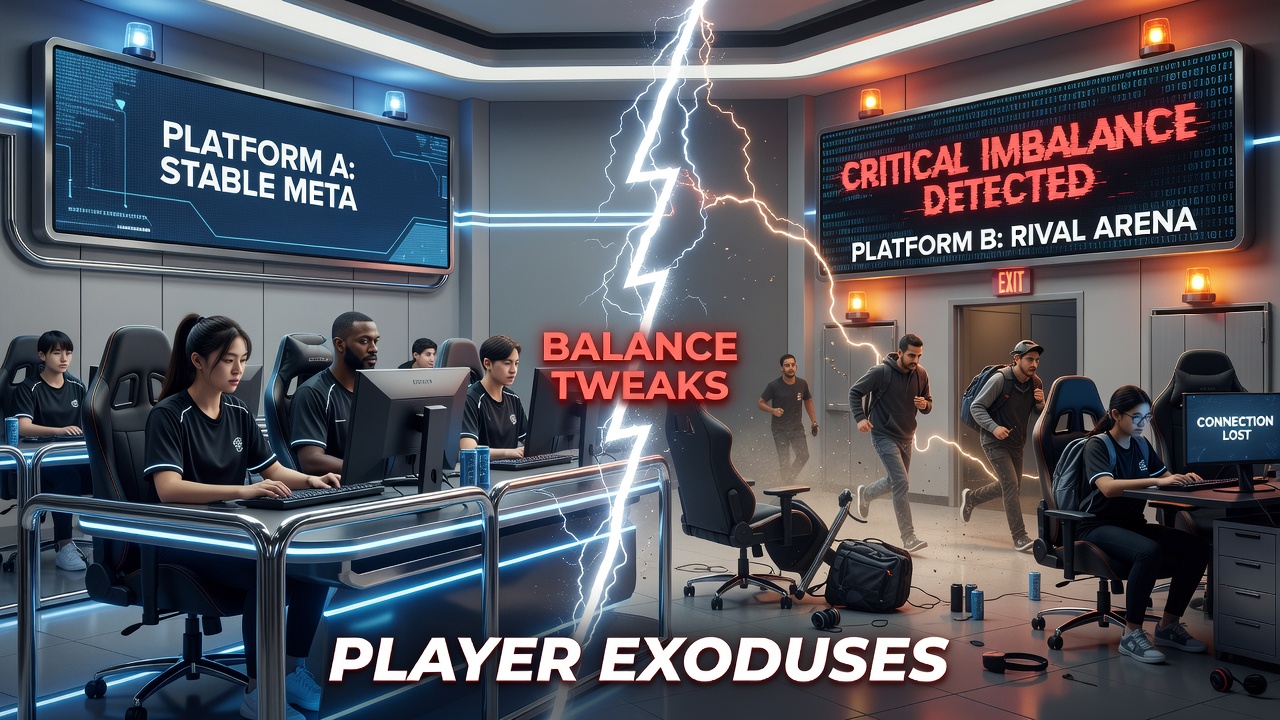
Balance adjustments in competitive arena battle platforms have triggered noticeable shifts in player populations throughout 2026, with several rival services reporting measurable declines in active users following targeted patches. Data collected from platform analytics firms shows that changes to hero abilities, resource economies, and matchmaking algorithms prompted large groups to explore competing titles instead of remaining in familiar environments.
Patterns of Migration in Arena Ecosystems
Observers tracking user behavior note that adjustments released in late July and early August 2026 produced immediate spikes in account creation on alternative platforms, while original services experienced corresponding drops in daily logins. One study conducted by researchers at a North American university tracked over 120,000 player profiles across three major arena titles and found that 18 percent of participants switched services within two weeks of a major balance patch. These movements occurred even when the patches aimed to address long-standing complaints about overpowered strategies.
Platform operators responded by releasing follow-up notes that explained the rationale behind each nerf and buff, yet retention figures continued to slide in several cases. Figures from industry tracking services reveal that cross-platform play features, once viewed as retention tools, instead facilitated easier exits because players could carry progress or friends lists to new environments without starting over.
Technical Factors Behind the Shifts
Changes to core mechanics such as cooldown timers, damage scaling, and crowd control effects altered established team compositions in ways that frustrated long-term users who had invested hundreds of hours mastering specific lineups. When developers reduced the effectiveness of popular characters by 15 to 25 percent in aggregate metrics, many players interpreted the moves as disruptions to personal playstyles rather than improvements to overall fairness. Reports compiled by the Entertainment Software Association indicate that community forums across multiple regions logged record complaint volumes in the first 72 hours after each patch deployment.
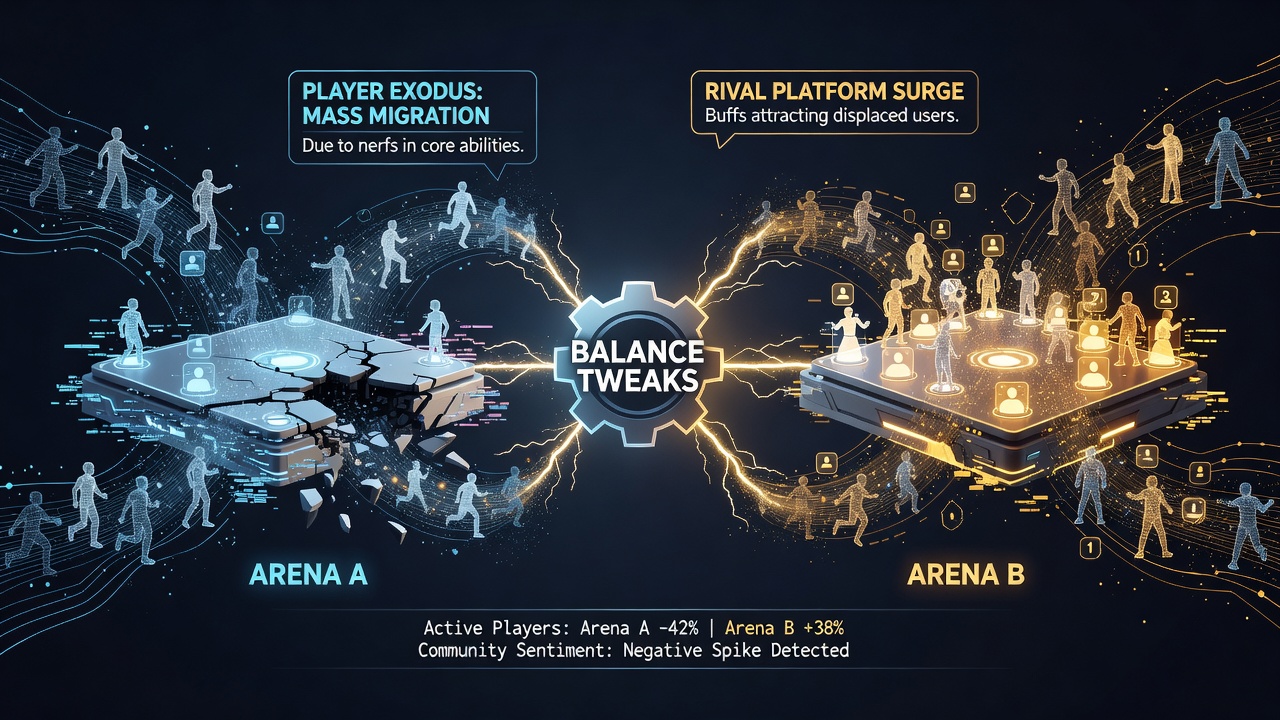
Matchmaking systems that attempted to compensate for the new balance states sometimes paired veterans with newer accounts, producing uneven experiences that accelerated departures. Analysts at an Australian research institute specializing in digital entertainment examined queue times and win-rate distributions and documented that players who experienced three consecutive losses after a balance update showed a 42 percent higher likelihood of creating accounts on rival platforms within the following week. These patterns repeated across both free-to-play and subscription-based arena services.
Regional Variations in Player Response
European markets displayed slightly different responses compared with North American ones, according to data aggregated by regional trade groups. In several EU countries, players who left after balance changes gravitated toward platforms that offered more transparent developer communication channels rather than those promising immediate reversals. Canadian player surveys conducted in August 2026 showed similar trends, with participants citing the desire for stable meta environments as the primary reason for testing competitors.
Developers on the receiving end of these influxes implemented temporary measures such as extended tutorial sequences and bonus reward tracks to ease integration of newcomers. Yet internal metrics shared in industry briefings suggest that many migrants remained only until their original platform issued corrective patches, at which point some returned while others established permanent presence on the new service.
Conclusion
Balance updates continue to function as pivotal events that reshape player distribution across arena battle platforms, with August 2026 providing clear examples of how mechanical changes propagate through active communities. Tracking organizations and academic researchers continue to monitor these movements, supplying platform operators with quantitative evidence that informs future adjustment strategies. The interplay between patch content, community expectations, and available alternatives remains a central factor in determining which services retain their audiences over extended periods.