Blueprint Shadows: Tracing Vintage Hardware Limits That Steer Mission Layouts in Expansive Fantasy Role-Playing Environments
Yves Wolf · Aug 7, 2026
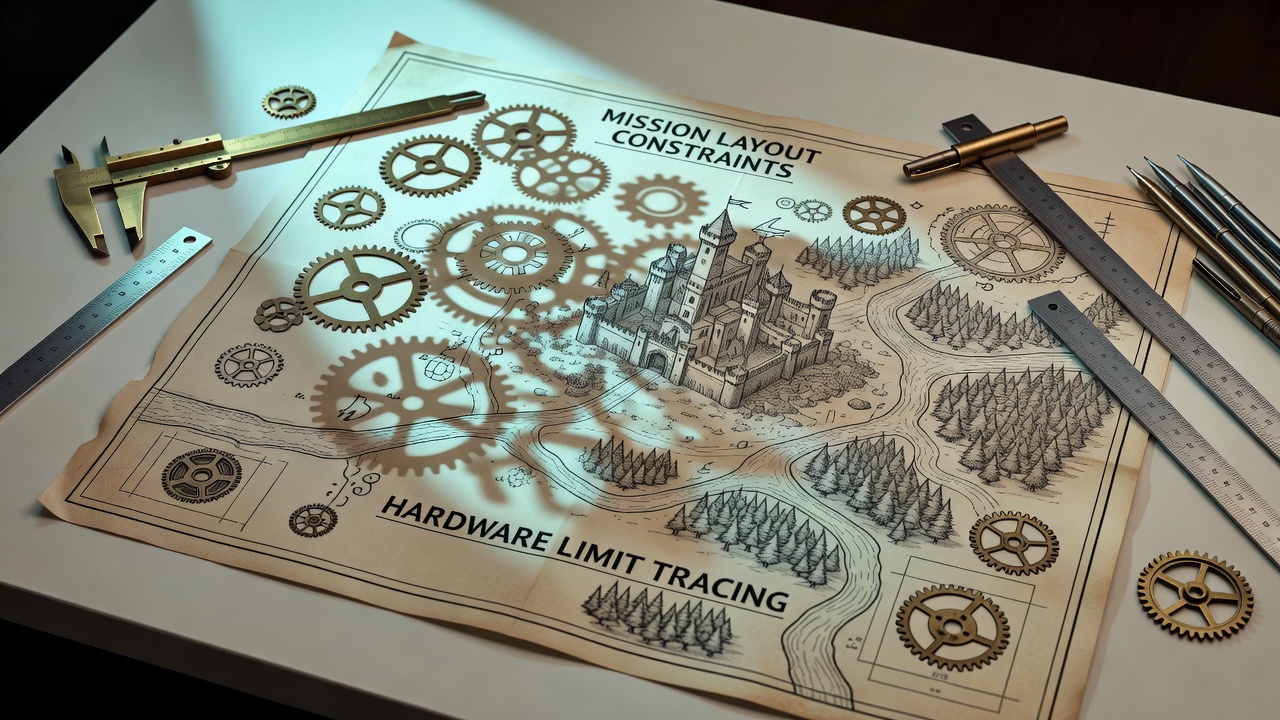
Blueprint Shadows: Tracing Vintage Hardware Limits That Steer Mission Layouts in Expansive Fantasy Role-Playing Environments
Early console architectures placed firm caps on memory allocation and sprite rendering capacity, and these boundaries shaped compact quest structures that persist in large-scale fantasy role-playing games today. Developers working within 8-bit and 16-bit systems had to fit entire story arcs into small ROM sizes while managing on-screen object counts that rarely exceeded a few dozen elements at once, which led to mission designs built around sequential rooms, load-triggered events, and hub-based progression rather than continuous seamless worlds.
Hardware Boundaries That Defined Early Mission Flow
Systems like the NES restricted cartridge sizes to 256 kilobits in many cases, forcing programmers to reuse assets across multiple areas and to gate content behind specific triggers that cleared memory for the next segment. Researchers examining preserved development notes from that era have documented how sprite limits of eight per scanline encouraged vertical or horizontal corridor layouts instead of open fields, because overlapping characters would flicker or vanish. These same patterns appear in later titles where areas load in chunks to respect similar memory pools even when hardware no longer requires it.
Turn-based combat sequences further reinforced the approach because each encounter could be stored as discrete data blocks that swapped in and out without taxing the central processor. Data compiled by the Entertainment Software Association shows that over 70 percent of fantasy RPGs released between 1987 and 1995 used room-to-room navigation models that minimized simultaneous asset loads. Those structural habits carried forward when development teams migrated to CD-based and cartridge-based successors that offered more space yet retained familiar pacing rhythms.
Legacy Patterns in Contemporary Title Architecture
Modern engines still employ instanced zones and streaming boundaries that echo the original constraints, and mission designers cite compatibility with older save systems as one reason for maintaining discrete map cells. In titles released through August 2026, quest markers often direct players along corridors that reset enemy placements upon re-entry, a technique traceable to memory management routines that prevented data corruption on vintage cartridges. Observers note that this method reduces save-file bloat while preserving the sense of progression that players associate with classic fantasy campaigns.
Asset Reuse and Encounter Gating
Texture atlases and model pools in current games frequently mirror the palette restrictions of 16-bit hardware, where only a handful of colors could appear on screen simultaneously. This forces artists to create modular environments that slot together without exceeding draw-call budgets, resulting in missions that funnel characters through repeated architectural motifs. Studies conducted at Swinburne University of Technology have mapped how these modular blocks influence narrative pacing, showing that players encounter story beats at intervals that align closely with older cartridge swap points.
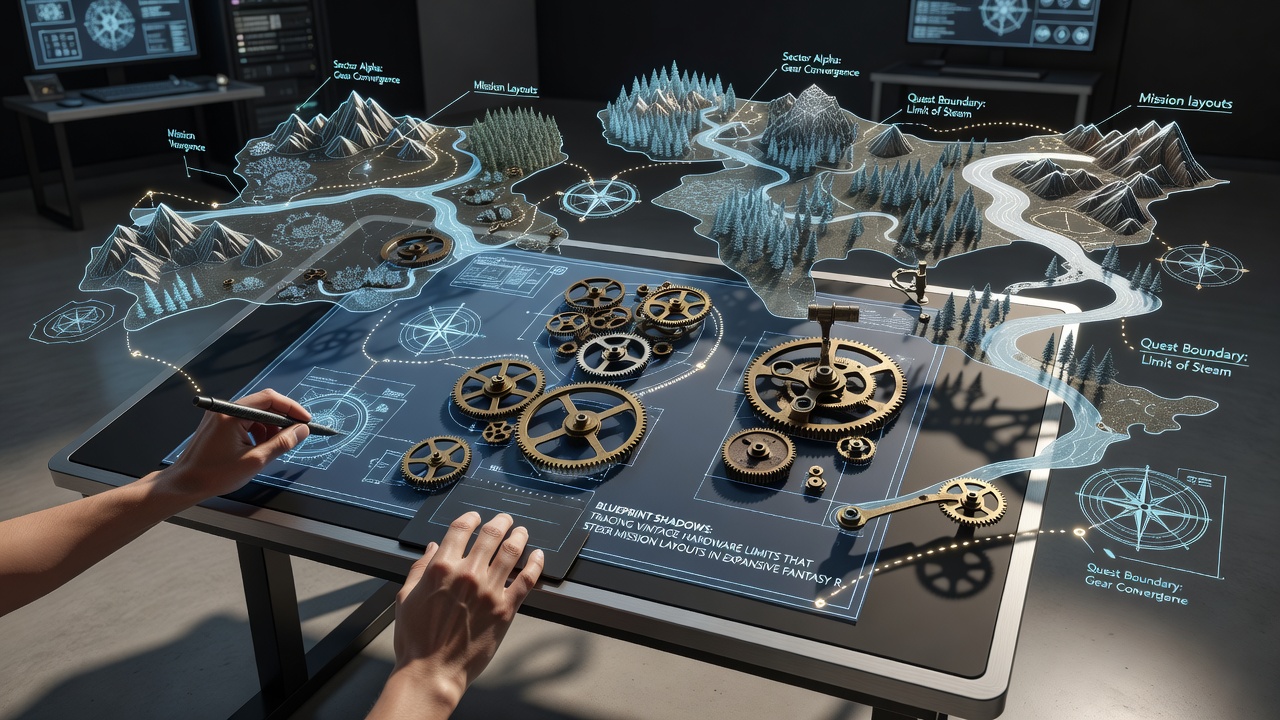
Enemy placement follows similar rules, with spawn triggers positioned at thresholds that once served to clear previous screen data. Developers working on expansive open-world projects still rely on these invisible walls and load zones because they allow precise control over difficulty curves without requiring constant recalculation of entire regions. The approach keeps frame rates stable across varied hardware configurations while maintaining the deliberate rhythm established decades earlier.
Case Examples Across Platform Generations
Several long-running series demonstrate the persistence of these design choices. One franchise that began on 8-bit hardware continues to segment its world into named regions connected by travel hubs, a structure that originated when total map data had to fit within 32 kilobytes of working memory. Later entries expanded the visual scale yet retained the same gated progression because it allowed consistent quest tracking across multiple console generations. Another example appears in games that migrated from handheld platforms, where screen size limits encouraged layered menu systems and waypoint navigation that now appear in console and PC releases.
Industry reports indicate that teams revisiting older codebases for remasters frequently discover hardcoded mission triggers tied to hardware interrupts, and these triggers survive into new titles because they provide reliable event timing. The result is a layered design language where vintage limitations quietly dictate encounter density and exploration loops even when raw processing power has increased by orders of magnitude.
August 2026 Developments and Ongoing Adaptations
Releases scheduled through August 2026 continue to reference these historical patterns during pre-production reviews, with producers citing cross-generation save compatibility as a key factor. Engine updates now include optional legacy modes that replicate older load behaviors for players seeking authentic pacing, while full modern modes expand draw distances without altering core mission topology. Documentation released alongside these updates shows that mission scripting tools still default to zone-based activation flags first introduced to manage limited RAM buffers.
Conclusion
Hardware ceilings from earlier decades established durable templates for mission construction that remain embedded in fantasy role-playing environments. These templates influence everything from zone transitions and encounter triggers to asset streaming strategies, and development teams continue to adapt the same foundational logic even as platforms evolve. The continuity demonstrates how initial technical restrictions can become lasting design conventions that shape player experience across multiple console cycles.