Branching Dialogues: How Localization Teams Adapt Choice Systems for Regional Cultural Norms in Adventure Series
Yara Werner · Jul 22, 2026
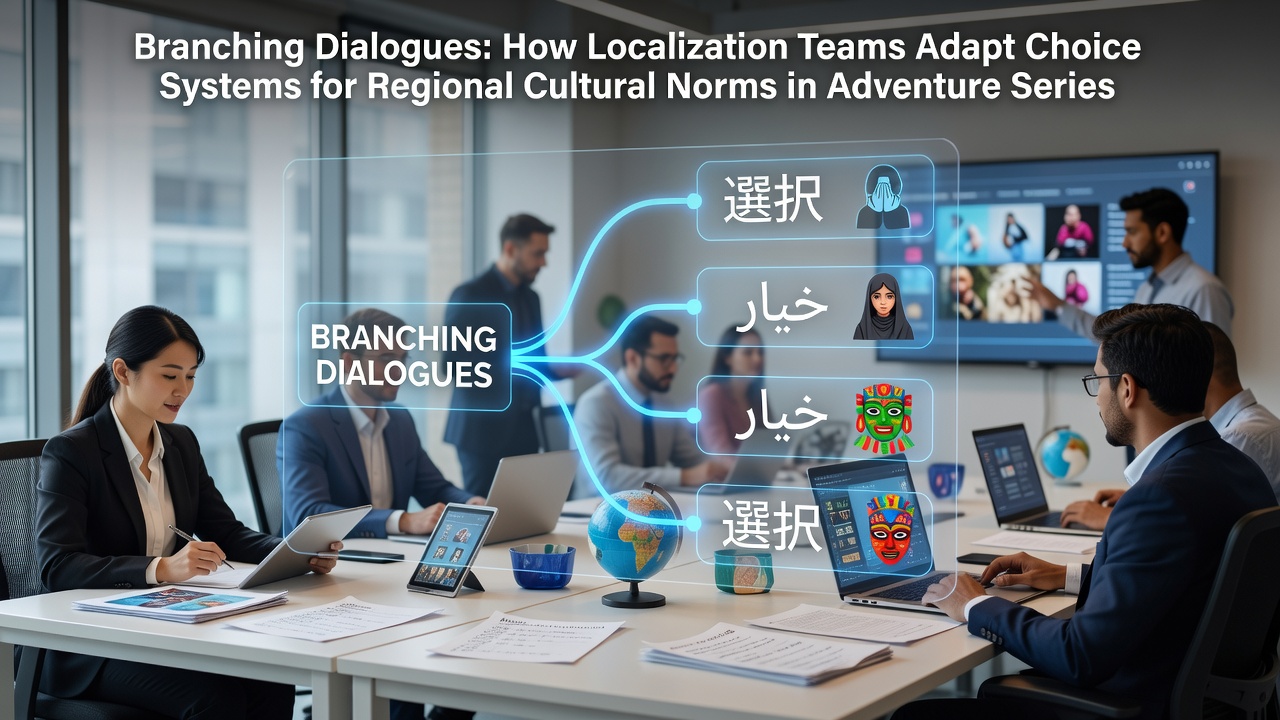
Branching Dialogues: How Localization Teams Adapt Choice Systems for Regional Cultural Norms in Adventure Series
Localization teams working on adventure series face intricate challenges when they translate branching dialogue systems because choices that resonate in one market can clash with expectations elsewhere, and these professionals adjust narrative paths to align with regional values while preserving core story mechanics. Data from industry reports indicate that adventure games with multiple endings require careful mapping of decision points to avoid unintended cultural missteps, especially when topics like family honor or authority figures enter the picture.
Core Processes in Dialogue Adaptation
Teams begin by auditing every dialogue node for elements that carry different weights across cultures, and they collaborate with regional consultants to rewrite options that reference sensitive themes such as direct confrontation or romantic subplots. According to findings shared by the Entertainment Software Association, developers in 2025 logged over 2,400 adjustments across major titles to handle these variances, with many changes occurring during the beta localization phase rather than after full translation. This approach allows studios to maintain consistent branching logic while shifting tone and vocabulary to match local sensibilities.
Researchers at universities in Canada have documented how honorific systems in East Asian markets demand extra layers of formality that Western versions rarely include, so localization groups expand choice trees to let players select respectful or casual registers without altering the underlying consequence structure. Those adjustments often involve adding new lines that preserve the original decision outcome yet embed culturally appropriate phrasing, and the work intensifies when games release simultaneous updates across regions.
Regional Variations and July 2026 Developments
In European markets, teams frequently soften references to hierarchy because audiences there respond differently to authority-based choices compared with players in parts of Asia, and data collected through playtests reveal that retention rates rise when options reflect collectivist values instead of individual rebellion. Australian game research groups have tracked similar patterns in titles that reached local audiences after cultural recalibration, noting higher completion percentages when family obligation dialogues receive extra nuance.
By July 2026 several adventure series rolled out patches that refined choice systems for Middle Eastern and Latin American audiences, where topics around gender roles and elder respect required targeted rewrites to prevent narrative branches from feeling out of place. These updates followed earlier global releases and incorporated feedback loops that let regional testers influence final dialogue variants without forcing developers to rebuild entire decision graphs.

Technical Tools and Collaboration Methods
Modern localization pipelines integrate specialized software that flags potential cultural triggers during initial script reviews, allowing teams to insert alternative dialogue branches early rather than patching them later. Observers at industry conferences note that these tools reduce revision cycles by roughly 30 percent when paired with on-site cultural advisors who understand both the source material and target norms. The process becomes especially complex in games featuring dozens of intersecting decision paths, where one altered line can ripple through later scenes.
Studios often maintain separate version control branches for each major region so that changes remain isolated until final integration, and this structure helps prevent conflicts when one market demands more dialogue options while another prefers streamlined choices. Research from European academic centers shows that such modular approaches preserve narrative coherence across releases while meeting distinct regulatory and social expectations in different territories.
Player Impact and Retention Patterns
Figures released by trade associations demonstrate that adventure titles with culturally adapted choice systems maintain stronger player engagement in secondary markets, because localized branches help audiences feel the decisions carry authentic weight. When teams neglect these adaptations, completion rates drop noticeably in regions where certain themes trigger discomfort, prompting more frequent revisits to earlier localization protocols.
Those who study player behavior across platforms report that subtle adjustments, such as rephrasing loyalty dilemmas or altering the framing of betrayal choices, produce measurable differences in how far users explore alternate endings. The work continues evolving as new adventure series launch, with teams drawing on accumulated data to anticipate which dialogue nodes will need the most attention during each regional rollout.
Conclusion
Localization efforts around branching dialogues in adventure series demonstrate ongoing refinement as teams balance technical consistency with cultural relevance across global audiences. The methods developed through repeated releases provide frameworks that future projects can apply when expanding choice systems into additional territories, and continued collaboration between developers and regional experts keeps these adaptations aligned with shifting market expectations.