Charting the Effects of Adaptive Difficulty Algorithms on Cognitive Load Patterns in Strategy-Focused Digital Experiences
Otto Krause · Jul 31, 2026
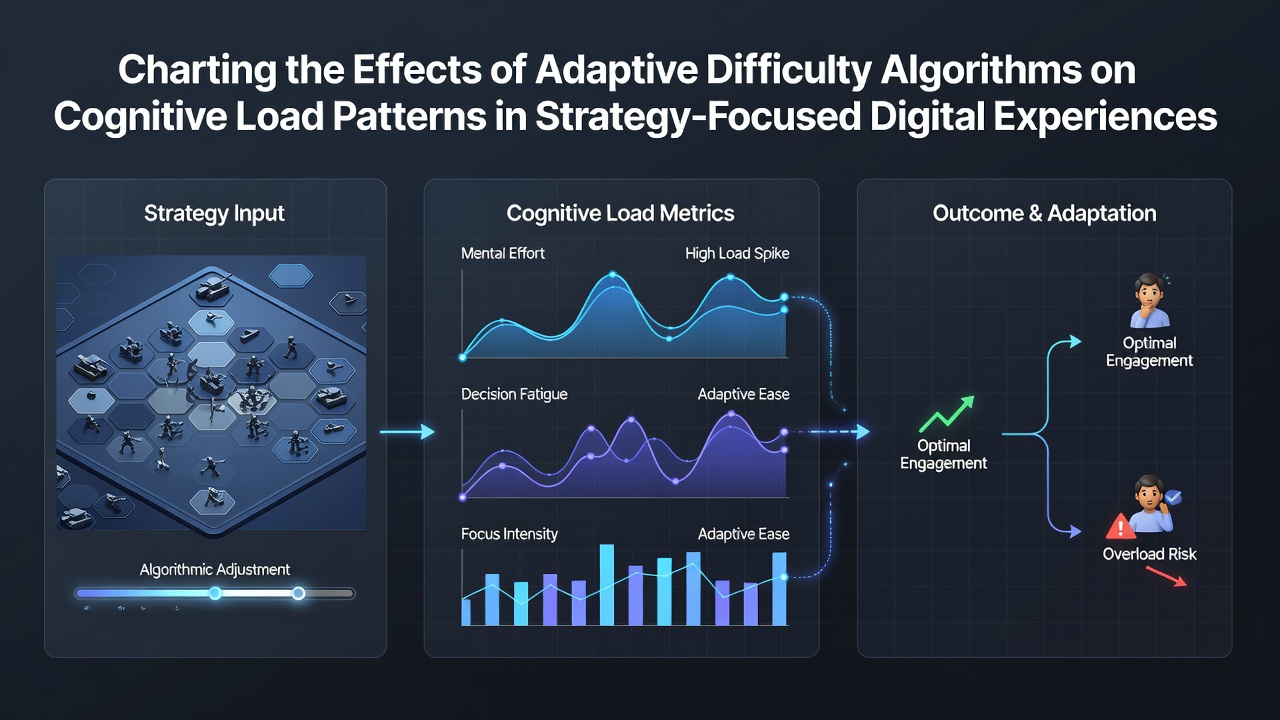
Charting the Effects of Adaptive Difficulty Algorithms on Cognitive Load Patterns in Strategy-Focused Digital Experiences
Adaptive difficulty algorithms have become central to how strategy-focused digital experiences adjust challenge levels in real time, and researchers track their influence on cognitive load patterns through performance data, physiological signals, and player retention metrics. These systems monitor inputs such as decision speed, error rates, and resource allocation efficiency, then modify parameters like opponent aggression, resource availability, or puzzle complexity to maintain engagement without overwhelming users. Studies conducted across multiple platforms show that such adjustments correlate with shifts in working memory demands and attention allocation, particularly in genres where players must balance long-term planning against immediate threats.
How Algorithms Detect and Respond to Player Performance
Developers implement machine learning models that process streams of gameplay telemetry, including move sequences and time-on-task measurements, to estimate current player skill and fatigue levels. When performance drops below set thresholds, the system may reduce the number of simultaneous objectives or provide additional visual cues, while upward adjustments introduce new variables like hidden enemy positions or time-limited events. Data collected from European mobile strategy titles released before July 2026 indicate that these interventions occur at intervals ranging from thirty seconds to several minutes, depending on session length and genre conventions. Observers note that the underlying models often draw from cognitive load theory frameworks, which separate intrinsic task demands from extraneous interface elements, allowing algorithms to target specific load components rather than applying blanket changes.
Measuring Cognitive Load in Live Play Sessions
Teams measure cognitive load through a combination of subjective scales, dual-task paradigms, and biometric sensors that record heart rate variability along with eye-tracking fixation durations. In one documented series of experiments on real-time strategy titles, participants exhibited elevated prefrontal cortex activation during periods of high algorithm-driven escalation, as captured by portable EEG headsets. Figures from these trials reveal that load patterns follow predictable curves: initial spikes occur when new mechanics are introduced, followed by stabilization once the algorithm detects improved efficiency. Australian research groups have published datasets showing that players maintain lower average load scores when difficulty ramps occur gradually rather than in abrupt jumps, although individual differences in spatial reasoning ability create noticeable variance across test groups.
Observed Patterns in Strategy Genres
Strategy experiences place unique demands on executive functions because players must track multiple interdependent systems, such as unit production queues, terrain modifiers, and opponent scouting networks. Adaptive algorithms in these contexts frequently target decision branching factors, scaling the depth of tactical options presented at any moment. Research indicates that when load remains within an optimal band, players demonstrate higher rates of innovative strategy discovery and longer session durations, whereas sustained overload correlates with increased abandonment after twenty to thirty minutes. A North American university study tracking thousands of console sessions found that titles incorporating real-time load balancing retained users 18 percent longer on average than static-difficulty counterparts during the first month of release. Those patterns hold across both single-player campaigns and competitive ladders, although the latter introduce additional social performance pressures that interact with algorithmic adjustments.
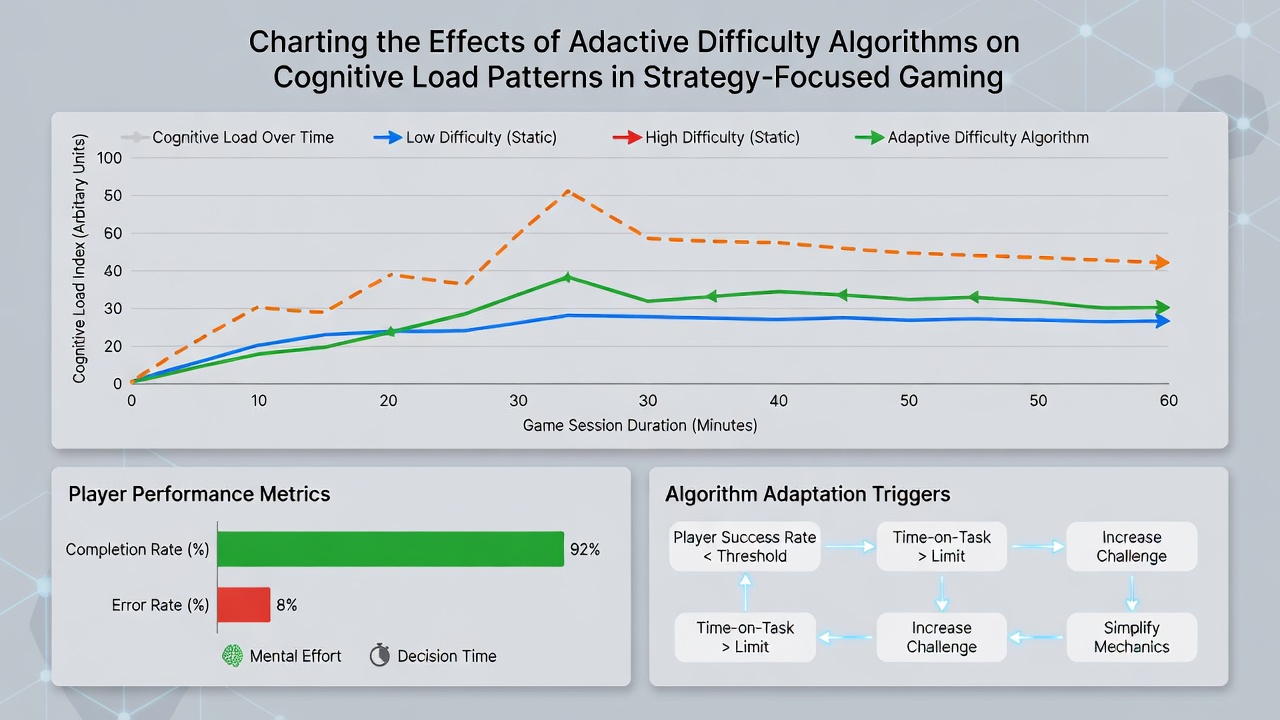
What's interesting is how these systems sometimes create feedback loops where reduced load leads to bolder player actions, prompting the algorithm to increase challenge once more. Data from Canadian labs monitoring eye movement during turn-based strategy matches shows that fixation patterns shift from broad map scanning to narrow unit inspection when difficulty rises, reflecting heightened selective attention. Such shifts prove measurable even when self-reported difficulty ratings remain constant, suggesting that implicit load changes occur below conscious awareness. Industry reports compiled by the Entertainment Software Association in 2025 further document that developers now integrate these metrics into post-launch updates, using aggregated anonymized data to refine algorithm weights for different demographic segments.
Integration with Broader Game Systems
Adaptive difficulty rarely operates in isolation, instead interfacing with progression systems, narrative pacing, and tutorial sequences. In expansive digital strategy environments, algorithms may delay introduction of advanced diplomacy mechanics until biometric indicators suggest the player has sufficient spare cognitive capacity. This layered approach draws on findings from cognitive psychology that emphasize the limited capacity of working memory, typically cited as holding four to seven chunks of information simultaneously. When external tools such as dynamic minimaps or predictive overlays activate in response to rising load, players can offload certain tracking tasks, freeing resources for higher-level planning. Observers have recorded that these interventions produce the most consistent benefits in mid-length sessions lasting forty to ninety minutes, after which cumulative fatigue begins to override algorithmic benefits.
Conclusion
Evidence gathered through telemetry, biometrics, and controlled experiments demonstrates that adaptive difficulty algorithms exert measurable influence on cognitive load patterns within strategy-focused digital experiences, with effects that vary according to ramp speed, player expertise, and session duration. Continued refinement of detection methods and integration with other game systems will likely shape how these tools evolve in titles released after July 2026. Entertainment Software Association reports and peer-reviewed work from international research consortia provide ongoing benchmarks for developers seeking to align algorithmic behavior with established principles of cognitive resource management.