Choice architectures in evolving platforms: how branching stories adapt when moving from handheld origins to larger screen formats
Yara Werner · Aug 21, 2026
Choice architectures in evolving platforms: how branching stories adapt when moving from handheld origins to larger screen formats
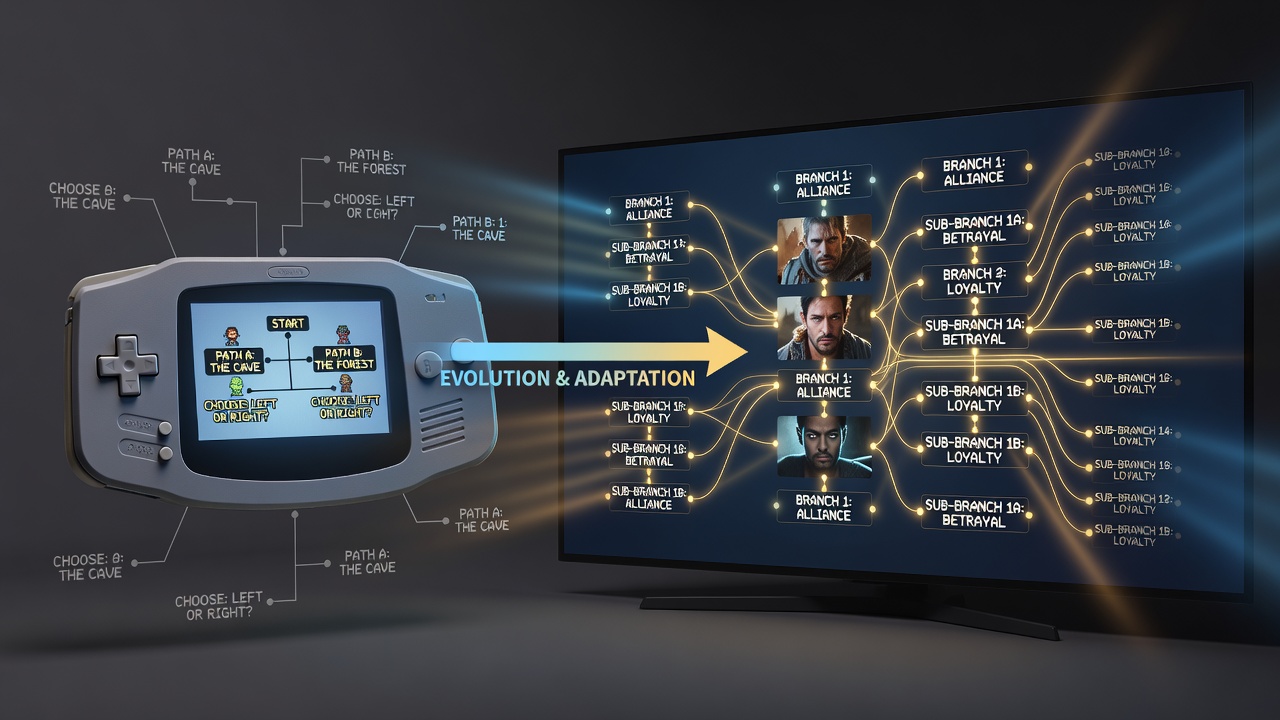
Developers have long built choice architectures around the constraints of handheld platforms where limited screen real estate forced compact decision trees and text-heavy presentations, yet the migration of these systems to larger formats introduces new structural possibilities that reshape how players encounter narrative branches. Research from the Entertainment Software Association indicates that narrative-driven titles originating on mobile and dedicated handhelds accounted for measurable growth in cross-platform releases through 2025, with several properties expanding their decision frameworks once moved to consoles and personal computers. The transition begins with interface scaling because handheld origins typically rely on sequential menus and abbreviated descriptors that fit small displays, whereas larger screens permit simultaneous display of multiple choice outcomes alongside environmental context. Data from industry tracking shows developers often retain core branching logic from the original design while layering additional visual layers that reveal character reactions or location changes in real time.Structural adjustments during platform expansion
Engineers adjust node density when porting stories because the original handheld versions frequently limited active choices to two or three options per scene to avoid overwhelming small touch targets. Larger displays support four or five concurrent paths without increasing cognitive load, allowing writers to expand secondary consequences that remained hidden in the mobile iteration. Observers note that this expansion occurs most visibly in titles where early handheld releases established linear progression trees that later versions subdivide into parallel sub-branches once screen space permits side-by-side comparison of outcomes.
Technical documentation from several studios reveals that memory allocation for save states also changes during migration since console and PC hardware can store more granular player history data than handheld cartridges or mobile local files. This capacity enables deeper tracking of prior decisions across extended play sessions, which in turn supports longer-term narrative callbacks that handheld versions could only hint at through shorter episodic releases.
Visual and pacing modifications
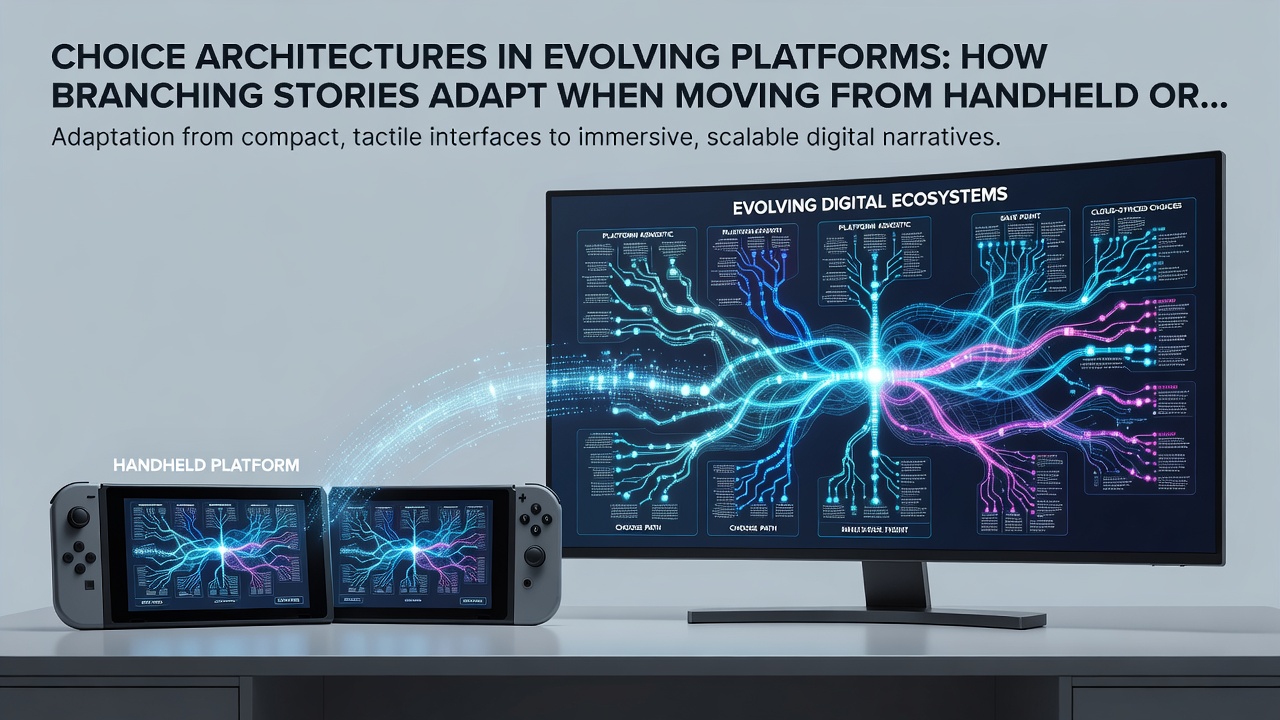
Art teams integrate additional environmental storytelling elements once the canvas expands because handheld versions often reserved pixels for text and simple character portraits. Console and PC adaptations place choice indicators within the game world itself, letting players see how selecting one dialogue option alters background details or non-player character positioning. Studies compiled by the Interactive Software Federation of Europe document that such spatial integration increases average session length by measurable margins in titles that began on smaller devices.
Pacing shifts follow because larger screens reduce the need for repeated menu transitions that punctuated handheld play, allowing scenes to unfold with continuous camera movement while choices remain accessible through peripheral UI elements. Developers therefore recalibrate timing windows for decisions, extending the duration players have to weigh options without pausing the underlying simulation. This adjustment appears consistently in ports released between 2024 and 2026 where original handheld pacing relied on discrete chapter breaks that larger-format versions merge into longer continuous sequences.
Current platform trends observed in 2026
August 2026 saw multiple handheld-originated properties reach console and PC storefronts with updated choice systems that preserve the original decision graphs while adding visual weight to previously text-only branches. Industry reports indicate these updates frequently include dynamic camera framing that highlights different characters during choice moments, a feature unnecessary on smaller displays but now standard once resolution and aspect ratio increase. The additional screen area also accommodates persistent choice history panels that remain visible without interrupting primary gameplay, a design element rarely feasible in the handheld versions.
Cross-platform development pipelines now incorporate automated testing for branch coverage that accounts for variable display sizes, ensuring no narrative path becomes inaccessible due to UI overflow on larger formats. Figures released by Canadian game industry associations show that titles employing these testing protocols achieve higher completion rates across player cohorts compared with earlier direct ports that retained unmodified handheld interfaces.
Conclusion
Platform expansion therefore requires deliberate recalibration of choice density, visual integration, and save-state granularity, each adjustment building directly on the compact architectures first established for handheld constraints. The resulting larger-format versions maintain the original narrative logic while exploiting increased display capacity to surface additional layers of consequence and context that remained compressed in earlier releases. These adaptations continue to evolve as hardware specifications advance and development tools standardize multi-resolution branching implementations.