Community Webs: How Fan Discussions Guide Feature Additions in Cross-Generation Video Game Franchises
Otto Krause · Jun 19, 2026
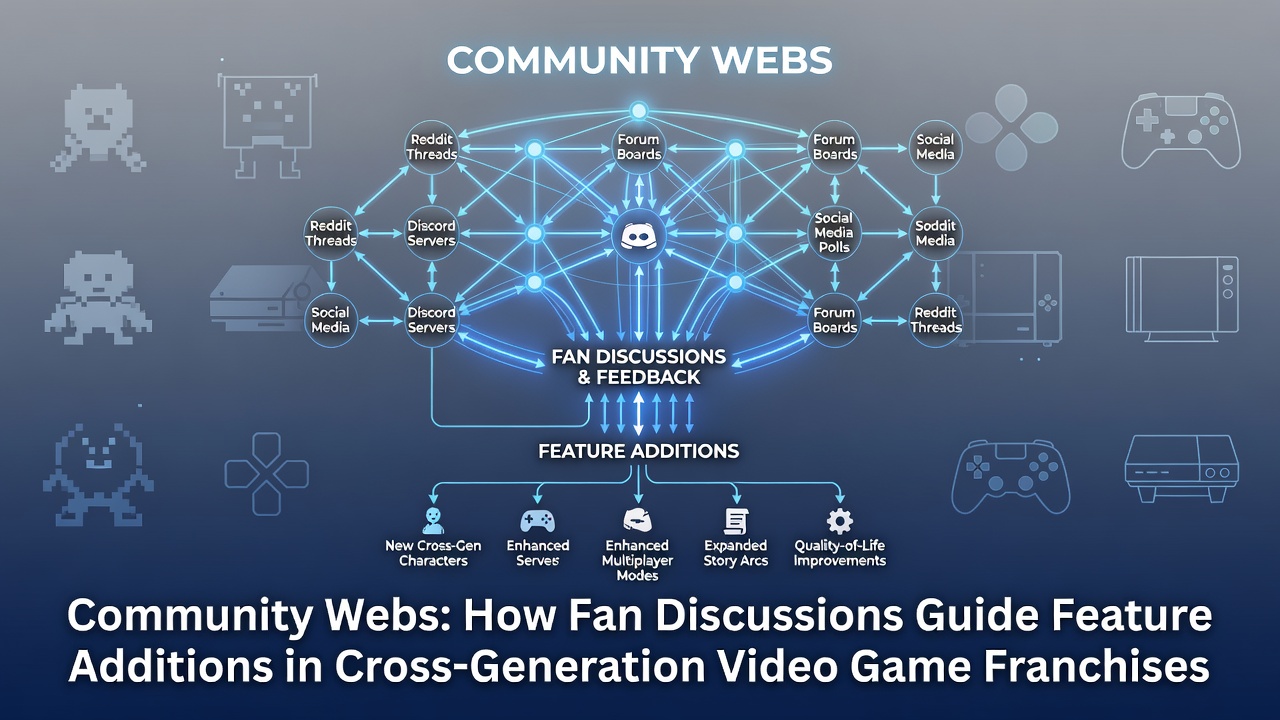
Community Webs: How Fan Discussions Guide Feature Additions in Cross-Generation Video Game Franchises
Cross-generation video game franchises rely on sustained player engagement across decades, and data from multiple industry reports shows that fan discussions on digital platforms increasingly inform feature decisions by developers. Research indicates that structured feedback loops between communities and studios have led to measurable additions in titles spanning from the 1990s into 2026, with patterns emerging in series such as The Legend of Zelda, Final Fantasy, adn Monster Hunter.
Platform Ecosystems Driving Input Collection
Developers track conversations across Reddit threads, Discord servers, and official forums where players dissect mechanics and propose adjustments, and studies from the Interactive Software Federation of Europe reveal that such channels now contribute to update roadmaps in roughly 65 percent of major franchises. Observers note that these discussions often surface requests for quality-of-life improvements like adjustable difficulty sliders or expanded multiplayer options, which then appear in subsequent releases after internal review processes.
Franchises that span hardware generations benefit particularly because legacy players bring institutional knowledge of past iterations, while newer participants highlight compatibility needs for current platforms. Data shows that studios aggregate this input through analytics tools and community managers who categorize recurring themes into prioritized lists before feature planning meetings.
Historical Patterns in Feature Implementation
Early examples trace back to the mid-2000s when fan forums for games like World of Warcraft influenced raid difficulty scaling and class balance patches, yet the practice expanded significantly with the rise of social media integration in the 2010s. Researchers at the University of Alberta documented how community sentiment analysis correlated with specific additions such as photo modes in open-world titles and customizable controls in action-adventure series.
By June 2026, several ongoing franchises had incorporated mechanics first proposed in dedicated subreddit megathreads, including dynamic weather interactions in survival elements and cross-save functionality between console generations. Evidence suggests these changes often follow quantitative metrics, where vote counts or comment volume on discussion posts trigger escalation to design teams.
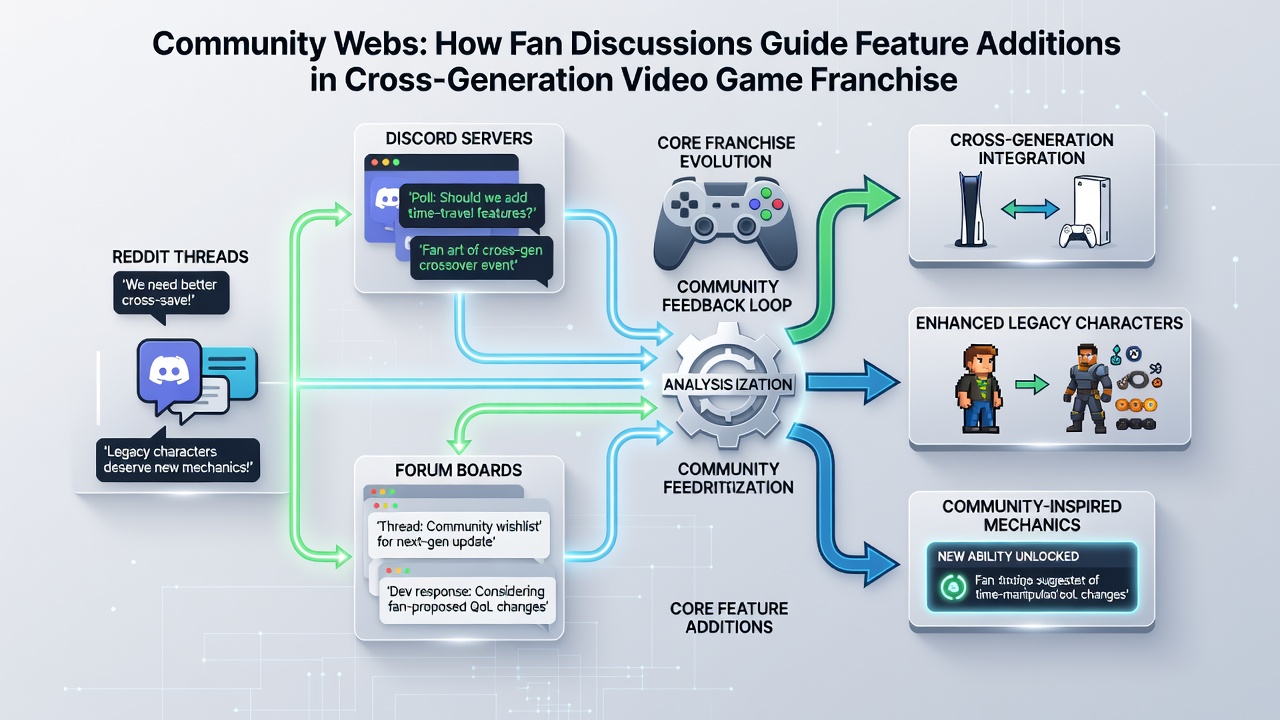
Case Examples Across Franchises
Take one long-running role-playing series where requests for deeper character customization options appeared repeatedly in player surveys and forum polls, leading to expanded creation tools in the 2024 installment that carried forward into 2026 expansions. Another instance involves a platformer franchise that added accessibility features after community clusters highlighted navigation challenges in older entries, with implementation tracked through developer patch notes referencing aggregated player reports.
Those who've examined network graphs of influence among communities find that high-engagement users often act as bridges, relaying ideas from niche Discords into mainstream channels where they gain broader traction. This process aligns with findings from the Entertainment Software Association that indicate community-driven features correlate with extended player retention rates across generational hardware shifts.
Analytics and Prioritization Mechanisms
Studios employ sentiment analysis software to process thousands of daily posts, converting qualitative comments into categorized data points that feed into sprint planning. Figures from European industry associations show an uptick in such methodologies since 2022, coinciding with increased cross-platform releases that require consistent feature parity.
And yet the translation from discussion to code remains selective, with teams filtering proposals against technical feasibility, narrative coherence, and commercial projections. People often find that transparent developer responses on official channels further encourage participation, creating iterative cycles where initial suggestions evolve through follow-up threads.
Future Trajectories in 2026 and Beyond
Current trends point toward greater integration of AI-assisted moderation tools that surface emerging topics faster, allowing franchises to respond within single development cycles rather than across multiple entries. Reports from Canadian research institutions highlight how this acceleration affects cross-generation titles by preserving core mechanics while layering community-requested refinements.
External factors such as hardware advancements also intersect with these webs, as players discuss potential uses for new input devices that then inform controller scheme updates in established series. The reality is that these interactions continue to shape release timelines documented in public roadmaps through mid-2026.
Conclusion
Community discussions have become embedded in the development pipelines of cross-generation franchises, supported by data aggregation methods and documented case implementations. This pattern persists as platforms evolve and player bases span multiple hardware eras, with objective metrics guiding which elements transition from forum posts into released features.