Decoding Regional Playstyle Variations That Shape Competitive Rankings in Team-Based Shooters Across Device Types
Morgan Krüger · Aug 14, 2026
Decoding Regional Playstyle Variations That Shape Competitive Rankings in Team-Based Shooters Across Device Types
Regional Patterns in Shooter Tactics
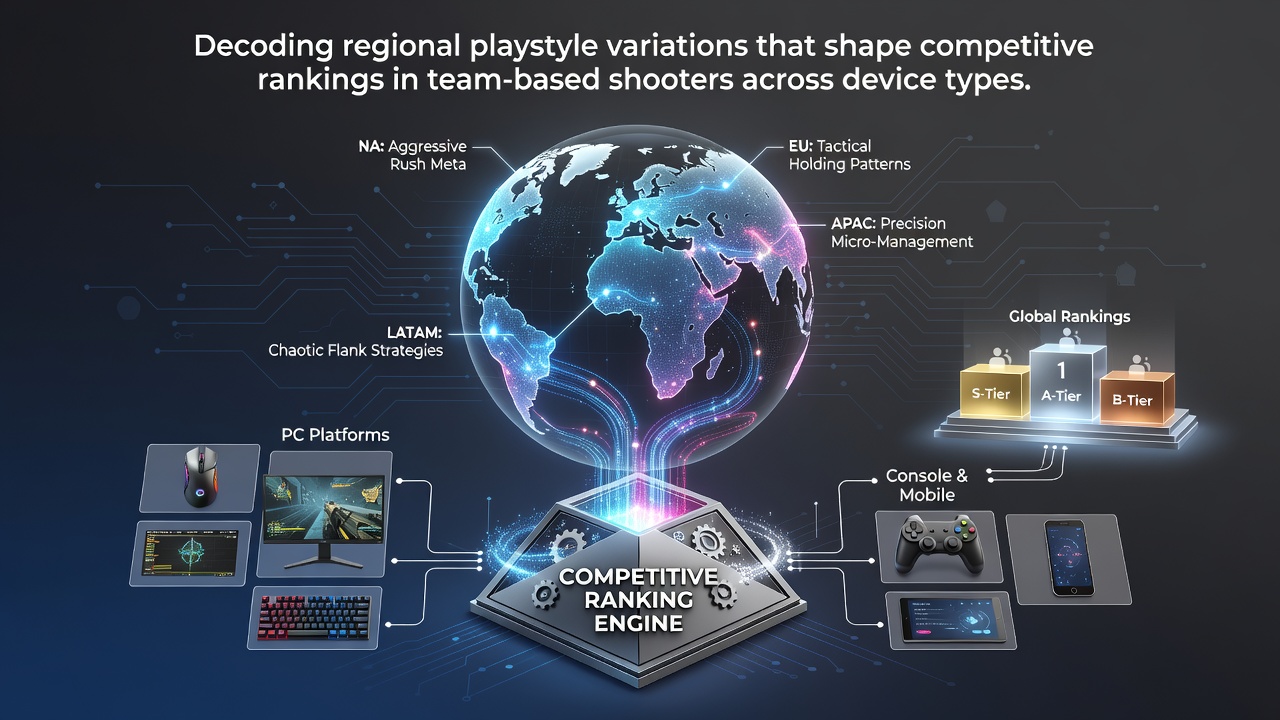
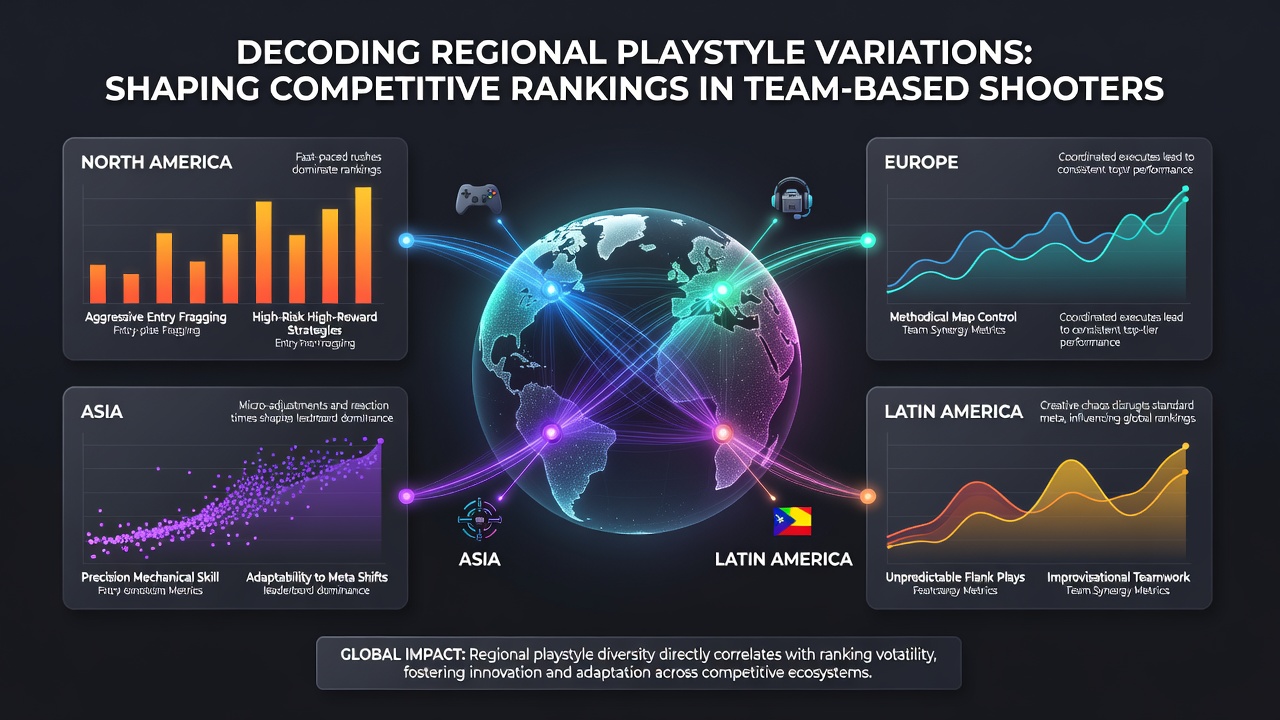
Competitive team-based shooters reveal distinct regional playstyles that influence how rankings form across platforms, and data from multiple esports analytics platforms show these patterns emerge consistently in titles like Valorant, Counter-Strike, and Overwatch. North American squads often prioritize aggressive entry fragging and quick rotations, whereas European teams emphasize coordinated utility usage and map control, while Asia-Pacific squads frequently adopt patient positioning that delays engagements until numerical advantages appear. These differences arise from local training environments and tournament structures, and they carry through when players switch between device types because input methods alter reaction times and precision thresholds.
Research compiled by the International Esports Federation indicates that regional tendencies affect win rates in cross-platform events, with European squads posting higher defensive success metrics on console versions due to controller aim assist mechanics that reward pre-aiming over flick shots. In August 2026, global leaderboards for Valorant showed Asian teams maintaining top positions in mobile divisions through superior communication layering that compensates for touchscreen latency, whereas North American rosters dominated PC brackets by leveraging raw mechanical skill developed in high-frame-rate environments.
Device-Specific Adaptations and Input Influences
PC setups allow for higher mouse sensitivity ranges that support wide flicks and rapid target acquisition, and this favors regions where players train with low-latency peripherals from an early age. Console players encounter standardized controller layouts that encourage strafe-shooting and crouch-spamming, patterns that appear more frequently in rankings data from Latin American circuits where console hardware penetration remains elevated. Mobile versions introduce swipe gestures and auto-fire toggles that shift emphasis toward positioning and ability timing rather than pure aiming, and Australian esports reports note that Oceania teams adapted faster to these constraints by developing hybrid roles focused on information gathering.
Cross-device tournaments expose how these input differences compound regional styles, and figures from the Asia Pacific Esports Association reveal that teams blending mobile and console players achieve steadier mid-round adaptations because they train across multiple control schemes simultaneously. Observers note that recoil patterns and movement acceleration vary by device, which forces squads to recalibrate their regional defaults when competing on unfamiliar hardware.
Impact on Global and Regional Rankings
Rankings systems aggregate performance across regions and devices, and this integration highlights how playstyle mismatches create rating volatility. European teams transitioning to mobile often lose ground initially because their utility-heavy approach requires precise timing that touch interfaces disrupt, yet data shows they recover faster than expected once they adjust crosshair placement habits. North American aggressive entries translate well to console but suffer when facing APAC defensive setups that punish overextension through superior map knowledge developed on lower refresh rate screens.
Analyses from Canadian esports research groups demonstrate that device type accounts for measurable variance in individual rating distributions, with PC players showing wider spreads in kill-death ratios due to mechanical skill ceilings, while mobile rankings cluster more tightly around team coordination metrics. These patterns affect qualification pathways for international events, and squads that master device-specific regional hybrids secure more consistent placement points over full seasons.
Training Ecosystems and Data Feedback Loops
Local academies and online communities reinforce regional tendencies through shared replay analysis and custom drills tailored to available hardware, and European facilities frequently incorporate console sessions to simulate controller-based opponents. In contrast, South Korean training centers prioritize PC mouse drills supplemented by mobile practice modules that replicate tournament conditions. This ecosystem creates feedback loops where ranking algorithms reward styles that dominate on the most common device in a given region, and cross-device events disrupt those loops by exposing hidden weaknesses.
University studies from the University of Melbourne have tracked how biometric data from competitive sessions correlates with regional performance drops when device types change, showing elevated stress indicators among players forced outside their primary input method. These findings help explain why certain regions maintain ranking leads only within specific device categories while struggling elsewhere.
Conclusion
Regional playstyle variations continue to shape competitive outcomes in team-based shooters as device diversity expands, and ongoing data collection from global tournaments provides clearer mappings of how input methods interact with geographic tendencies. Teams that integrate these insights into preparation routines achieve more stable rankings across platforms, while those that overlook device-specific regional adjustments face repeated rating inconsistencies in mixed-device environments.