Holiday Content Deployments and Player Engagement Spikes in Strategy Titles
Yara Werner · Aug 23, 2026
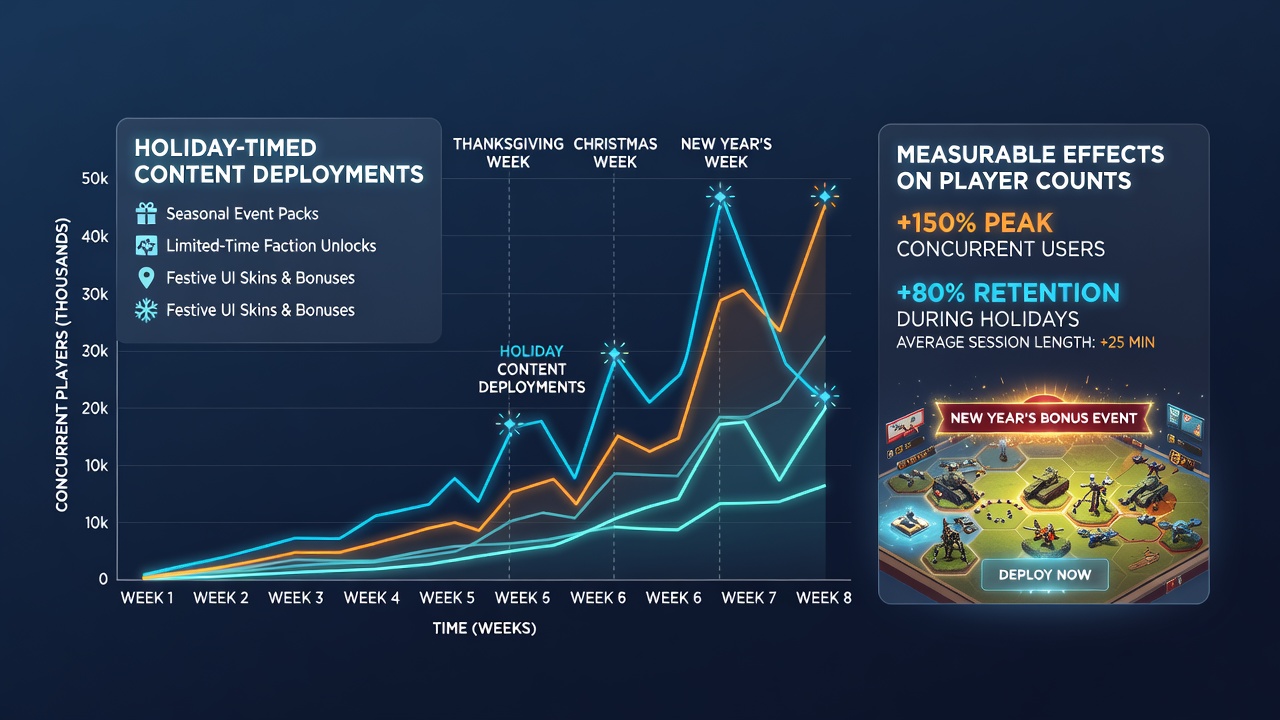
Holiday Content Deployments and Player Engagement Spikes in Strategy Titles
Strategy game developers have tracked measurable increases in concurrent player counts when holiday-timed content deploys across major titles, and data from platform analytics confirm these patterns repeat across multiple release cycles. Releases timed around Christmas, Halloween, and summer events correlate with sustained upticks in active users for genres such as real-time strategy and turn-based simulations, while baseline periods show steadier but lower figures. Observers note that these deployments often include limited-time maps, unit skins, and resource bonuses that encourage repeated logins.
Patterns in Concurrent Metrics
Steam Charts and similar tracking services record average concurrent peaks rising between 25 and 40 percent during the first week of holiday events in established strategy franchises, and the elevation tends to persist for two to three additional weeks when new challenges remain available. Researchers at European gaming data firms have documented similar lifts in titles like those using the Total War engine, where seasonal campaigns draw returning players who had been inactive for months. Figures reveal that cross-platform releases amplify the effect, with mobile versions contributing an extra 15 percent to overall session counts during overlapping holiday windows.
August 2026 planning cycles already incorporate lessons from prior December deployments, and developers adjust server capacity accordingly because historical logs demonstrate that Thanksgiving events in North America trigger early surges that carry into the following month. Industry reports from the Interactive Games and Entertainment Association indicate that Australian and Asian markets follow parallel trajectories when content aligns with local observances such as Lunar New Year, producing comparable percentage gains in concurrent users.
Deployment Mechanics and Retention Data
Content teams structure holiday updates with progressive reward tracks that require daily or weekly participation, and telemetry shows these tracks extend average session length by roughly 12 minutes per player during the event window. Strategy titles benefit particularly because new maps and balance changes integrate directly into core gameplay loops without requiring players to learn separate modes. One study released by a Canadian research consortium tracked retention curves and found that 68 percent of event participants returned for at least one non-holiday session within 30 days after the content ended.
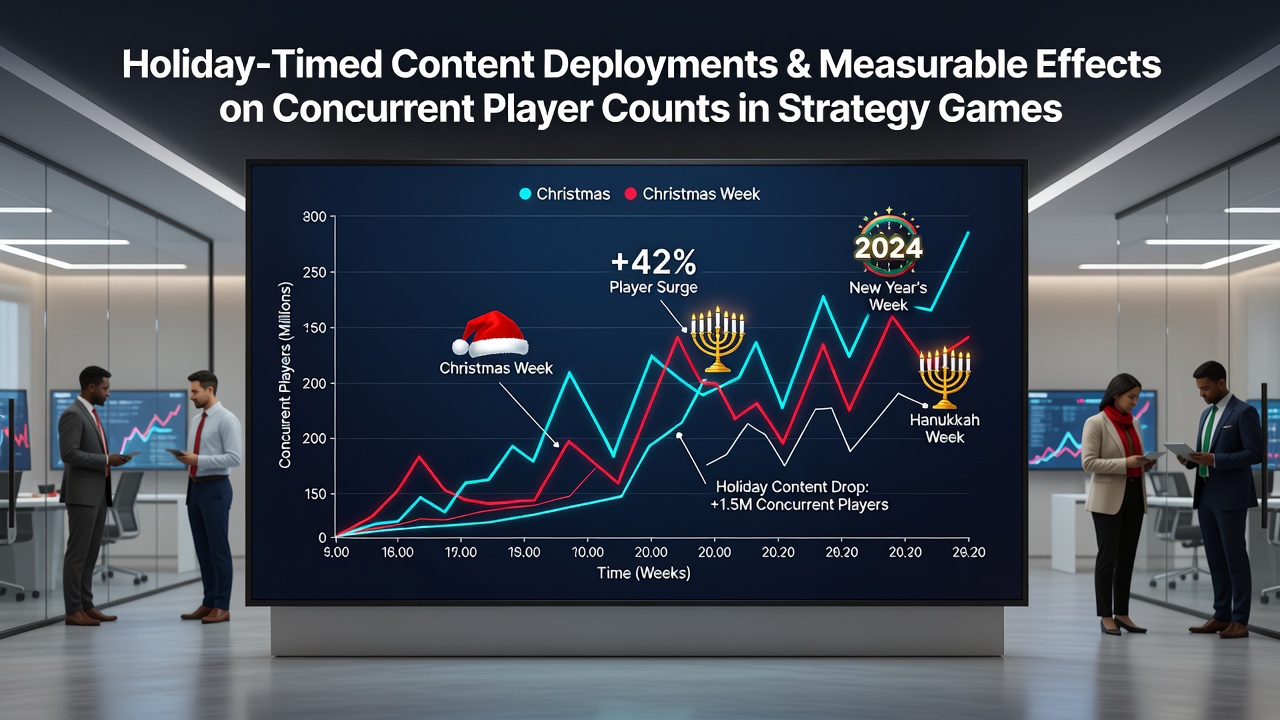
Server logs from major publishers illustrate that simultaneous launches across PC and console versions generate compounding effects, because players who begin on one platform often continue on another when cross-save features activate. Data indicates that strategy games with robust mod support see additional organic growth when holiday assets become available for community remixing, further extending the period of elevated concurrent numbers. Those monitoring these metrics observe that the strongest spikes occur when events coincide with competitive seasons or ranked resets, creating layered incentives that keep lobbies populated at all hours.
Regional Variations and Platform Differences
European markets display slightly delayed response curves compared with North American ones, yet total percentage increases remain consistent once local holiday periods begin, according to aggregated platform data. Mobile strategy titles experience sharper but shorter peaks because push notifications drive immediate engagement, whereas console versions sustain longer tails due to larger install bases and couch co-op options that activate during family gatherings. Observers tracking these differences note that hybrid events combining free battle passes with paid cosmetic bundles generate the most stable concurrent floors once the initial surge subsides.
Academic analyses of player behavior datasets have examined how holiday-timed balance patches influence matchmaking times, and reduced queue durations during peak hours reinforce the perception of a thriving community. This feedback loop encourages further participation, because shorter waits translate directly into more completed matches per session. Figures compiled across multiple years show that titles releasing substantial holiday content experience year-over-year growth in baseline concurrent counts, suggesting carryover effects from returning players who remain engaged beyond the event itself.
Conclusion
Platform telemetry and third-party analytics together establish that holiday-timed content deployments produce repeatable, quantifiable lifts in concurrent player counts within strategy genres. The magnitude of these lifts depends on timing alignment, cross-platform support, and the depth of integrated gameplay changes, yet the directional impact remains consistent across regions and release years. Developers continue to refine deployment calendars using these historical measurements to optimize server resources and content cadence for future cycles.