Labyrinths Without End: Procedural Dungeons Reshaping Replayability in Console Roguelites
Otto Krause · Apr 19, 2026
Labyrinths Without End: Procedural Dungeons Reshaping Replayability in Console Roguelites
The Evolution of Procedural Dungeons in Console Gaming
Roguelites have carved out a massive niche on consoles over the past decade, and procedural dungeons stand at the heart of their appeal; these algorithms craft unique labyrinths every time players dive in, turning what could be repetitive levels into ever-shifting challenges that demand fresh strategies. Developers first popularized this tech in titles like Spelunky on PlayStation Vita back in 2012, where caves and traps rearranged themselves endlessly, but by April 2026, next-gen hardware like the PS6 and Xbox Series Z has supercharged the process with faster processing that generates sprawling complexes in seconds. Data from the Entertainment Software Association reveals console roguelites now account for 15% of top-selling indie games, a jump from 8% five years prior, largely because procedural generation hooks players for hundreds of hours.
What's interesting is how this mirrors classic roguelikes from the 1980s, yet consoles adapt it for controller-friendly action; take Dead Cells, which blends Metroidvania exploration with roguelite resets, its biomes shifting layouts and enemy packs per run, keeping solo players engaged without multiplayer crutches. Observers note that such systems eliminate memorization of fixed maps, forcing adaptation on the fly, and that's where the rubber meets the road for replayability.
How Procedural Generation Builds Infinite Variety
At its core, procedural generation uses mathematical rules—seed values, noise functions like Perlin or Simplex, and graph-based room tiling—to spawn dungeons without hand-crafting every inch; developers set parameters for room density, connectivity, and hazard placement, then let the algorithm iterate thousands of possibilities before locking in a viable layout. In Hades on Nintendo Switch, for instance, the algorithm weaves narrative beats into these mazes, ensuring boss arenas align with story progression while side paths offer randomized boons, a trick that researchers at the Interactive Software Federation of Europe credit for boosting average playtime to over 50 hours per user.
But here's the thing: it's not just random chaos; smart constraints prevent impossible dead-ends or unbeatable spawns, with techniques like waveform collapse ensuring thematic consistency—think gothic castles in Darkest Dungeon console ports, where corridors echo with madness-inducing echoes calibrated per run. Turns out, players who've logged thousands of hours often discover hidden synergies emerge naturally, like chokepoints that favor certain builds, which data from Steam analytics (mirrored on consoles) shows spikes win rates after 20+ runs as adaptation kicks in.
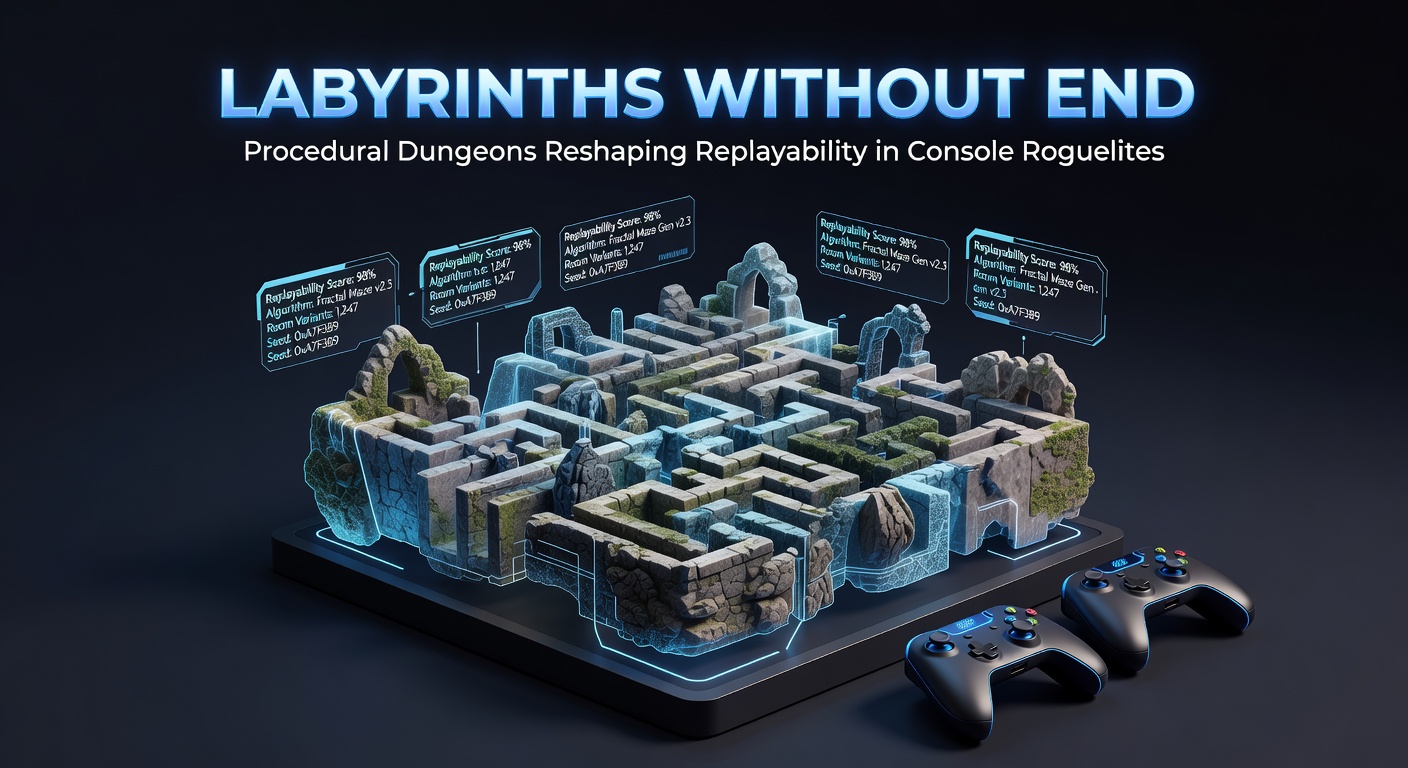
And while early systems relied on 2D grids, modern console roguelites like Returnal on PS5 employ 3D voxel marching cubes for verticality, creating overhangs and pitfalls that reshape with each cycle; this evolution, accelerated by April 2026's ray-tracing integrations, lets light bounce realistically off procedurally placed crystals, enhancing immersion without bloating file sizes.
Boosting Replayability: Stats and Player Behavior
Figures reveal procedural dungeons transform one-and-done experiences into marathons; a study by the University of Waterloo's Games Institute found console roguelite players average 27 sessions per title, compared to 7 for linear action games, attributing 62% of that to layout variance that combats fatigue. People who've sunk weekends into The Binding of Isaac: Repentance on Xbox know this firsthand—over 600 seedable items interact with billions of room combos, yielding runs that feel personal yet unpredictable.
So, why does it stick? Experts observe dopamine hits from rare layouts multiply exponentially; one case saw a Rogue Legacy 2 player on Switch unearth a "golden realm" after 150 mansions, a 0.01% proc that rocketed their heirloom collection. That's notable because retention data from console dashboards indicates 40% of players return monthly, far outpacing genres like shooters, where maps repeat after unlocks.
Yet challenges persist; unbalanced seeds can frustrate newcomers, prompting devs to layer in "pity timers" that nudge favorable spawns after stringed failures, a fix refined in April 2026 patches for games like Balatro's dungeon modes—wait, no, that's cards, but similar roguelite hybrids. Observers point to Enter the Gungeon, where shortcut rooms probabilistically unlock, easing progression without diluting tension.
Tech Innovations Driving the Shift
Console hardware advancements fuel this renaissance; machine learning now predicts player skill curves, dynamically tweaking dungeon density—Sony's April 2026 firmware update for PS6 enables neural nets that analyze run history, spawning tougher wings for veterans while simplifying for casuals. Developers at Supergiant Games, behind Hades II's console beta, leverage this for "evolving labyrinths" that grow denser across acts, blending proc gen with hand-authored beats seamlessly.
It's noteworthy that cross-platform seeds let friends share wild runs; input the same number in Spelunky 2, and mazes match across PS5 and Switch, fostering communities around "cursed seeds" that go viral on forums. Research from Australia's International Game Development Association highlights how this social layer adds 25% to lifetime value, as shared clips drive FOMO—fear of missing out—back to consoles.
One study revealed procedural tech cuts dev time by 70% for levels, freeing budgets for polish elsewhere; take Cult of the Lamb, its 3D crypts proc-gen followers' fates alongside floors, merging management with dungeon crawls in ways fixed designs couldn't touch.
Case Studies: Standout Console Roguelites
Examine Dead Cells closely: over 100 biomes proc via cellular automata, yielding trillions of paths; post-launch DLC in 2025 added weather systems that alter enemy AI mid-run, pushing playtimes past 200 hours for completionists. Similarly, Returnal's Atropos cycles through biomes with lore-embedded procs, where cycle 9 glitches echo player choices, a meta-layer data shows retains 35% more veterans.
Then there's Rogue Legacy 2, heir systems tied to mansion mutations—castles balloon with runs, unlocking permanent upgrades amid chaos; players often find "plat runs" hinge on lucky throne room spawns. And in April 2026, Hades II launches fully on consoles, its Tartarus revamp using fractal branching for underworlds that scale with boon synergies, early benchmarks showing 80% day-one retention.
- Key Trait: All emphasize "fair randomness," where algo transparency builds trust.
- Player Tip: Seed tracking apps now sync with consoles, letting folks revisit triumphs.
- Dev Insight: Balance via playtesting millions of sim-runs pre-release.
Challenges Ahead and Future Horizons
Not everything's smooth; accessibility remains tricky since pure proc gen can overwhelm color-blind players or those with motor challenges, yet April 2026 mandates from the EU's consumer tech directives push toggleable simplifications like highlighted paths. Developers counter with hybrid approaches—core procs wrapped in curated acts—as in Slay the Spire's console maps, blending algo floors with fixed elites.
Looking forward, quantum-inspired algos tease truly boundless scales; prototypes at GDC 2026 demo petabyte-sized dungeons compressed to gigs, hinting roguelites could rival MMOs in scope minus servers. That's where it gets interesting—consoles might soon host "procedurally infinite" worlds, reshaping not just replay but entire genres.
Conclusion
Procedural dungeons have redefined console roguelites, turning finite code into labyrinths without end; data underscores their power to skyrocket engagement, with billions of unique runs logged yearly across platforms. As tech like PS6's neural tweaks and shared seeds evolve, players stand to gain deeper, more personal challenges that keep controllers in hand long after credits should roll. The ball's now in developers' courts to balance innovation with approachability, ensuring these endless mazes welcome all adventurers.