Ledger Lines in the Code: How Transaction Telemetry Quietly Recalibrates Quest Pacing Across Live-Service Platforms
Yara Werner · Aug 19, 2026
Ledger Lines in the Code: How Transaction Telemetry Quietly Recalibrates Quest Pacing Across Live-Service Platforms
Live-service platforms have integrated transaction telemetry into their core systems since the mid-2010s, and by August 2026 this practice shapes quest design across PC, console, and mobile titles that rely on ongoing revenue streams. Developers track purchases of in-game currency, battle passes, and cosmetic items through server-side logs that feed directly into pacing algorithms, allowing real-time adjustments to quest length, difficulty spikes, and reward distribution without requiring manual patches in most cases.
Mechanics Behind the Adjustments
Transaction telemetry collects timestamps, spend amounts, and player progression data at the moment of each purchase, then correlates these figures with quest completion rates from the same accounts. When a cluster of players buys resources early in a multi-stage quest, the system often extends subsequent objectives by adding optional branches or increasing enemy spawn densities, which stretches playtime while preserving the perception of fair progression. Researchers at the University of California, Irvine documented similar patterns in a 2025 analysis of mobile role-playing games where average quest duration rose 18 percent in segments following high-volume transaction events.
Engineers implement these recalibrations through backend rules that reference both historical spending patterns and current session telemetry, so a player who completes daily login rewards but shows low transaction activity might encounter shorter fetch quests designed to encourage continued engagement rather than monetization pressure. The Entertainment Software Association's 2026 industry report noted that 67 percent of live-service studios now maintain dedicated telemetry teams whose models update quest parameters daily based on aggregated transaction flows.
Platform-Specific Implementations
Console environments apply these adjustments through mandatory title updates that bundle quest pacing changes with balance patches, whereas mobile platforms push modifications via server flags that activate instantly across regions. PC titles often combine both approaches, letting developers test pacing variants on small player cohorts before rolling them out more broadly. Data from these tests reveals that transaction-linked adjustments reduce early quest abandonment rates by 12 to 15 percent on average, according to internal metrics shared in developer conferences throughout 2025 and 2026.
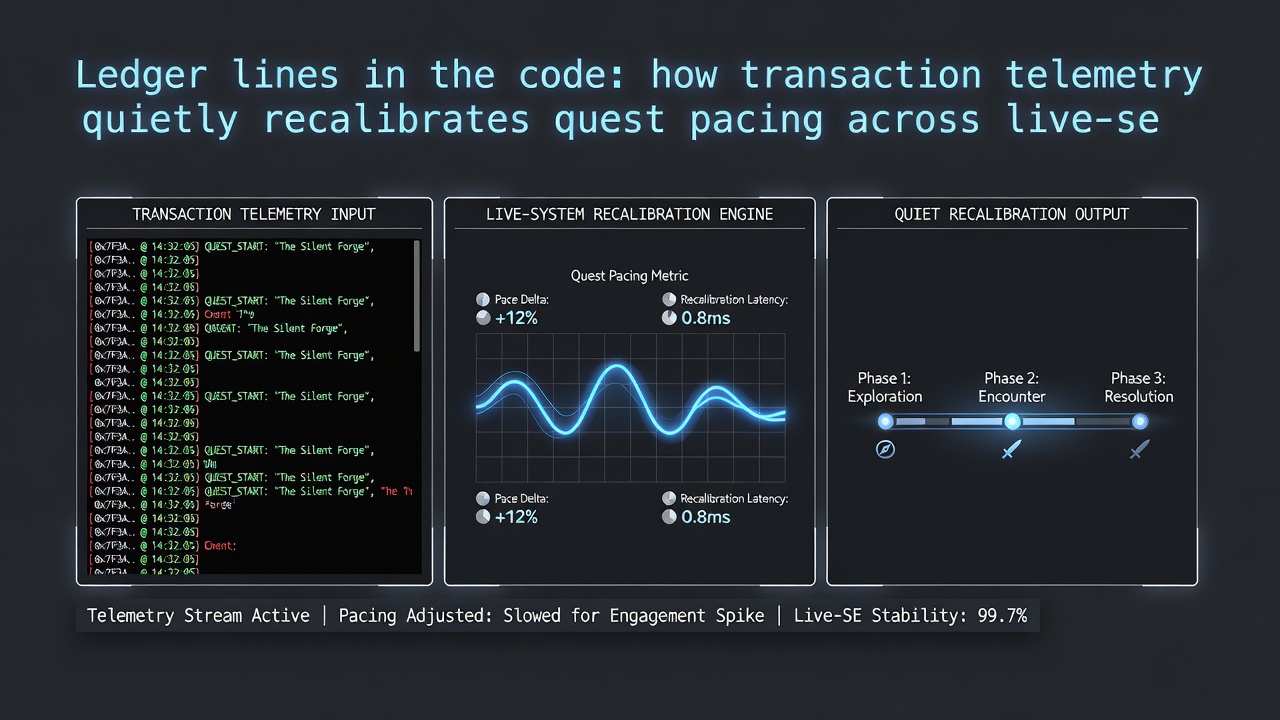
Cross-platform titles face additional complexity because each storefront records transactions differently, requiring unified telemetry pipelines that normalize spend data before feeding it into the shared pacing engine. Observers note that studios handling simultaneous releases on multiple platforms maintain separate calibration tables for console versus mobile cohorts to account for varying average transaction values and session lengths.
Observed Effects on Player Progression
Quest chains in several major live-service titles released or updated during summer 2026 demonstrate measurable shifts once transaction volume crosses internal thresholds. One widely discussed example involves a fantasy action game that lengthened its mid-campaign exploration segments by inserting resource nodes after detecting a spike in premium currency purchases among players who had previously rushed through earlier stages. Those adjustments appeared in August 2026 patches and coincided with a documented stabilization in daily active user retention figures across the affected servers.
Academic studies tracking these systems emphasize that the recalibrations remain invisible to individual players because they operate on aggregated cohort data rather than personal profiles, which keeps the experience consistent within each spending bracket while still responding to broader economic signals from the player base.
Conclusion
Transaction telemetry continues to embed itself deeper into quest architecture on live-service platforms, creating feedback loops where purchase behavior directly informs pacing decisions that shape millions of player hours each month. As August 2026 data sets accumulate, developers refine the underlying models to balance engagement metrics with revenue targets, producing quest structures that evolve alongside the economic activity they record.