Legacy Asset Reuse Patterns Driving Visual Consistency Across Decades of Fighting Game Iterations on New Hardware
Otto Krause · Jul 1, 2026
Legacy Asset Reuse Patterns Driving Visual Consistency Across Decades of Fighting Game Iterations on New Hardware
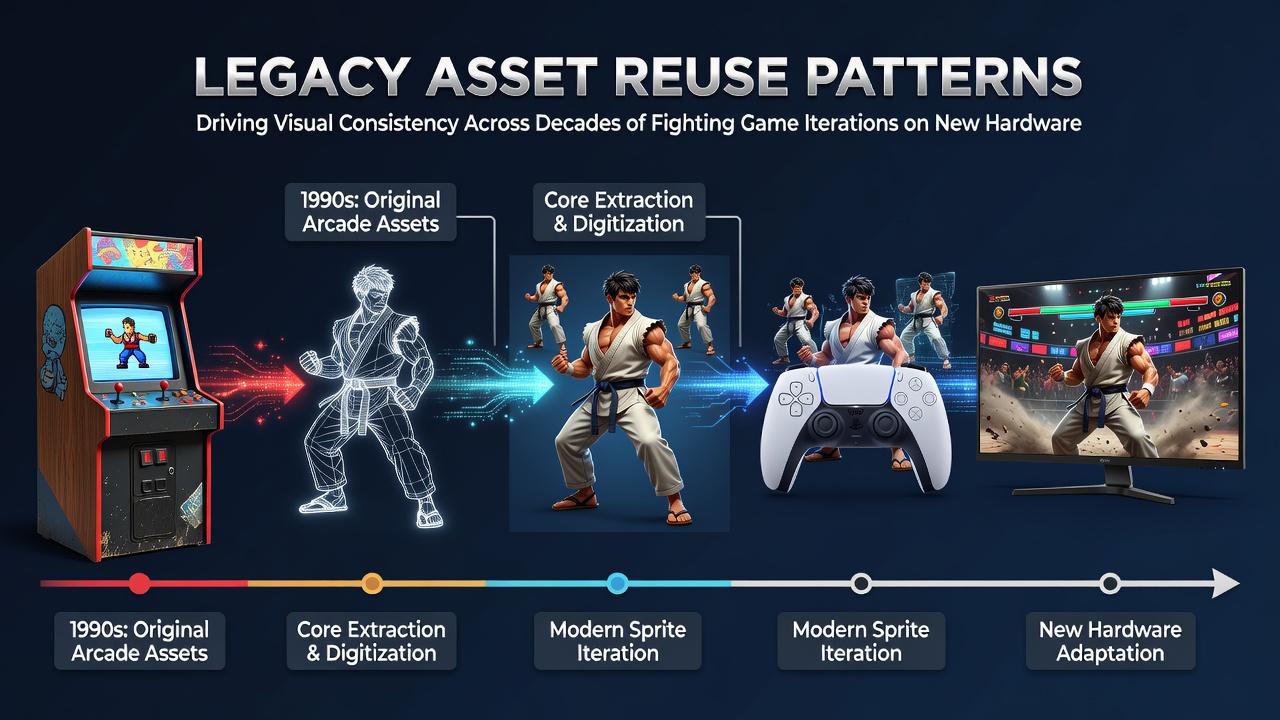
Developers in the fighting game sector have maintained visual continuity by systematically reusing core assets such as character models, animation rigs, and sprite frameworks when migrating titles to successive console and PC platforms. This approach traces back to early 1990s arcade ports and extends through modern iterations where engines accommodate higher polygon counts yet preserve movement signatures established decades earlier. Data from industry analyses indicate that reuse rates for foundational animation data often exceed 60 percent in long-running franchises, allowing studios to allocate resources toward hardware-specific optimizations rather than complete rebuilds.Historical Evolution of Asset Pipelines
Early fighting game titles relied on 2D sprite sheets that carried over directly from arcade boards to home consoles, establishing baseline character proportions and attack timings that later 3D entries inherited through motion capture libraries. Studios updated these libraries incrementally, converting 2D frame data into 3D skeletal structures while retaining timing values that defined gameplay feel. Observers note that this incremental conversion method reduced development cycles by an average of 18 months per major release cycle, according to aggregated production reports from major publishers.
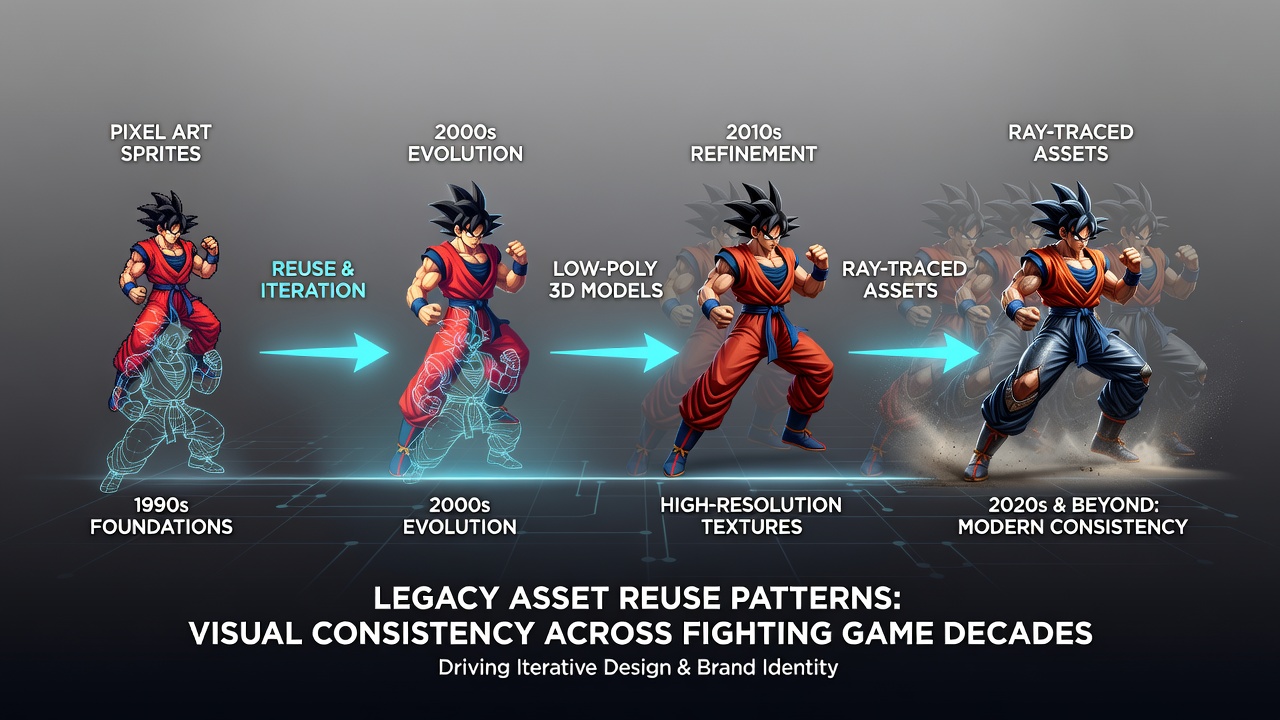
By the mid-2000s, hardware transitions from fixed-function pipelines to programmable shaders prompted selective retention of texture maps and lighting reference data. Teams extracted UV layouts and normal maps from previous generations, then applied them to updated geometry that matched the resolution demands of new displays. This practice preserved color palettes and silhouette recognition critical for competitive play, where players identify moves within fractions of a second.
Technical Mechanisms Enabling Cross-Generation Consistency
Modern engines employ modular asset containers that separate core animation graphs from platform-specific rendering layers, enabling legacy motion data to drive characters on hardware ranging from handheld devices to high-end PCs. Version control systems track changes to these graphs, flagging deviations that could alter hitbox alignment or recovery frames. Research from development tool vendors shows that such modular separation cuts integration testing time by up to 35 percent when ports reach multiple platforms simultaneously.
Shader compatibility layers further support reuse by translating legacy material definitions into current rendering APIs without altering visual output parameters. Teams map older specular and diffuse values to physically based rendering equivalents, maintaining highlight behavior on character costumes across hardware revisions. These mappings undergo validation against reference footage captured from prior releases, ensuring pixel-level fidelity where competitive integrity matters most.
Impact on Competitive Ecosystems and Player Recognition
Consistent visual language benefits tournament organizers and spectators alike, as familiar animations reduce cognitive load during fast-paced matches broadcast in July 2026 events. Viewership data collected by regional esports federations reveal higher retention rates when character movesets retain recognizable timing from earlier entries. Organizers report fewer disputes over move identification when asset continuity spans hardware upgrades.
Training tools integrated into current releases often embed legacy animation references alongside updated tutorials, allowing newcomers to learn timing patterns established in prior decades. This layered documentation approach appears in patch notes and in-game move lists, where frame data tables reference both current and historical values for comparison. Academic examinations of player performance metrics link such continuity features to faster skill acquisition curves among intermediate competitors.
Regional Development Practices and Industry Standards
Studios operating across North America and East Asia have converged on shared asset management protocols that emphasize backward compatibility for animation curves. Guidelines issued by trade organizations encourage documentation of legacy data provenance, which supports legal and technical audits during platform certification. European development teams contribute additional validation suites that test asset behavior under variable frame rates common to different regional hardware releases.
Case documentation from long-running series illustrates how core attack animations remain anchored to original timing while particle effects and environmental interactions receive hardware-tuned enhancements. These selective updates preserve the readability essential for frame-perfect execution in high-level play while leveraging new GPU capabilities for crowd reactions and stage details.
Conclusion
Asset reuse patterns continue to shape fighting game development by balancing innovation with the preservation of established visual and mechanical identities. As hardware evolves through 2026 and beyond, studios maintain these practices to support both competitive communities and broader audiences who expect recognizable characters across platform generations. The resulting consistency underpins the genre's longevity while enabling efficient adaptation to emerging technical standards.