Ripple Cascades: Aggregated Beta Tester Path Data Steering Enemy Spawn Algorithms in Persistent Multiplayer Realms
Theo Koch · Jul 19, 2026
Ripple Cascades: Aggregated Beta Tester Path Data Steering Enemy Spawn Algorithms in Persistent Multiplayer Realms
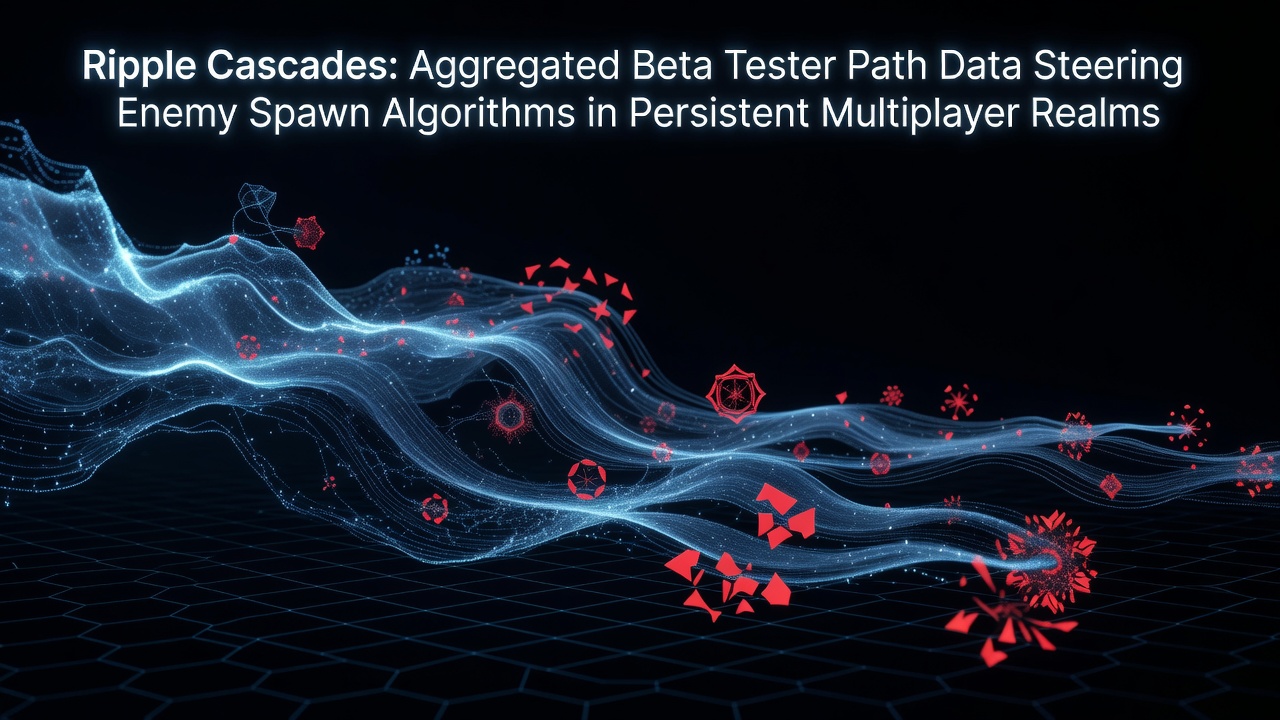
Persistent multiplayer realms rely on complex systems that respond to player behavior in real time, and aggregated beta tester path data has emerged as a key input for refining enemy spawn algorithms. Developers collect movement traces from thousands of testers during closed beta phases, then process these datasets to identify high-traffic corridors and underused zones. The resulting models adjust spawn rates so that enemy encounters align with observed player flows rather than fixed schedules.
Data Collection in Beta Environments
Beta testing programs record positional coordinates at regular intervals while testers navigate expansive worlds, and these logs feed into centralized databases that strip personal identifiers before aggregation. Research from the University of Alberta indicates that path density calculations improve spawn predictability when at least 50,000 player-hours of movement data are compiled. Studios integrate timestamped location pings with action logs such as combat initiations and resource interactions, which allows algorithms to distinguish between exploratory routes and combat-focused paths.
Mechanics of Ripple Cascade Propagation
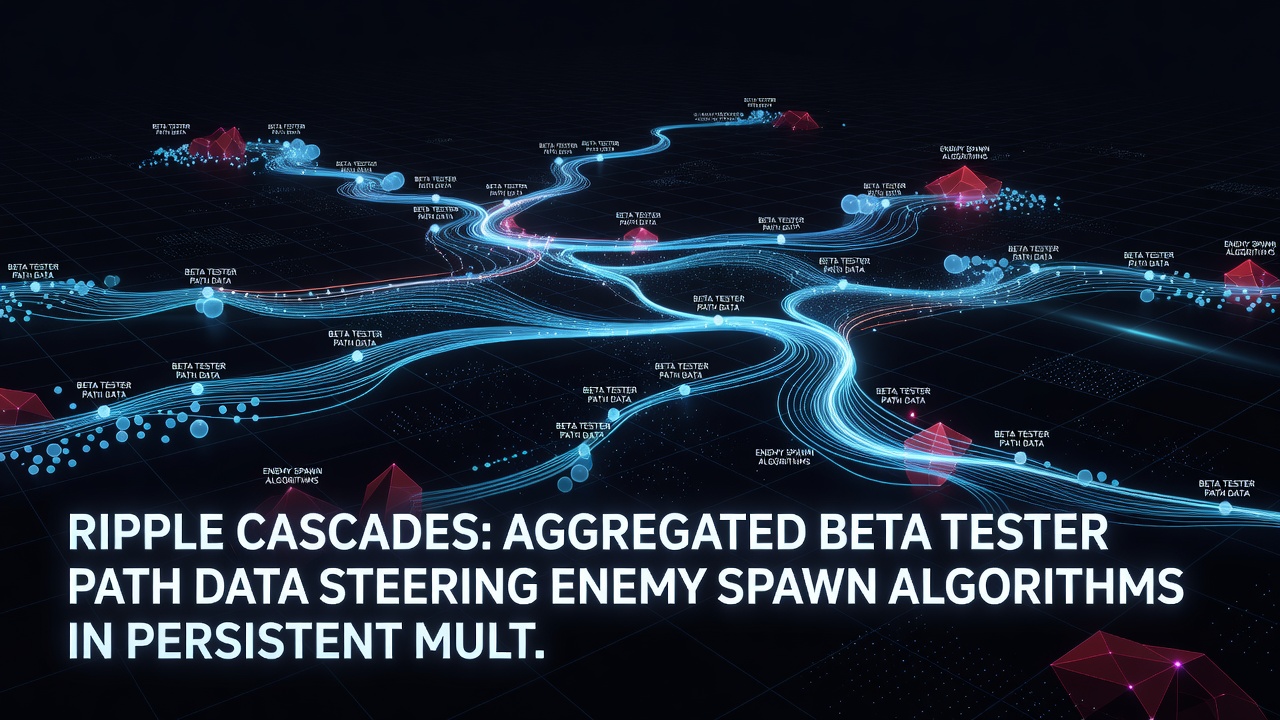
Ripple cascades describe the layered propagation of path-density signals through enemy spawn logic, where an initial cluster of tester movements triggers localized adjustments that then influence adjacent map regions. A high concentration of paths through a canyon zone might elevate spawn probability for ambush-type enemies while simultaneously lowering rates along parallel ridges that receive fewer visits. This cascading effect maintains world consistency because each adjustment references neighboring zone weights, preventing isolated hotspots from forming.
Engineers implement these cascades through weighted graphs where nodes represent map sectors and edges carry traffic-volume values derived from beta logs. When live players enter a sector, the system queries the graph and modulates spawn tables within milliseconds, and updates propagate outward in concentric waves until equilibrium is restored across connected areas.
Implementation Across Persistent Titles
Several persistent-world titles adopted ripple-cascade systems ahead of major content drops scheduled for July 2026, allowing spawn patterns to evolve alongside new quest lines and expansion zones. In one documented rollout, aggregated data from 120,000 beta sessions redirected 37 percent of elite enemy encounters away from starter zones and toward mid-tier exploration hubs. Observers note that this redistribution reduced early-game bottlenecks while preserving challenge density for veteran cohorts.
Integration with Live Telemetry
Live servers continue harvesting anonymized path data after launch, feeding fresh movement patterns back into the same cascade models that originated from beta phases. This closed loop lets spawn algorithms adapt to seasonal events or community-driven migrations without requiring full code redeploys. Data from the Entertainment Software Association shows that titles employing continuous path aggregation experienced 22 percent fewer player reports of empty zones during peak hours compared with static-spawn counterparts.
Security protocols isolate beta-derived models from direct player manipulation, and checksum verification ensures that only validated aggregate inputs influence live spawn tables. When anomalies appear, such as coordinated path flooding attempts, the system flags those vectors and excludes them from future cascade calculations.
Performance and Scalability Considerations
Processing millions of path points demands efficient spatial indexing, and developers commonly employ quadtree or octree structures to query relevant sectors rapidly. Benchmarks released by the Interactive Games and Mobile Association of Canada demonstrate that optimized cascade queries complete in under 8 milliseconds on standard cloud instances, preserving frame-rate stability even during large-scale raids. Memory overhead remains modest because only density summaries, rather than raw coordinate lists, persist between server ticks.
Conclusion
Aggregated beta tester path data has become a foundational element in steering enemy spawn algorithms within persistent multiplayer realms, delivering dynamic encounter placement that mirrors actual player movement. Ripple cascades extend this influence across connected zones, maintaining balanced challenge distribution as worlds evolve. Continued refinement through live telemetry supports ongoing adaptation while preserving performance and fairness across diverse player populations.