Seamless Sync: Tech Powering Cross-Platform Multiplayer Across PC, Console, and Mobile
Morgan Krüger · Apr 15, 2026
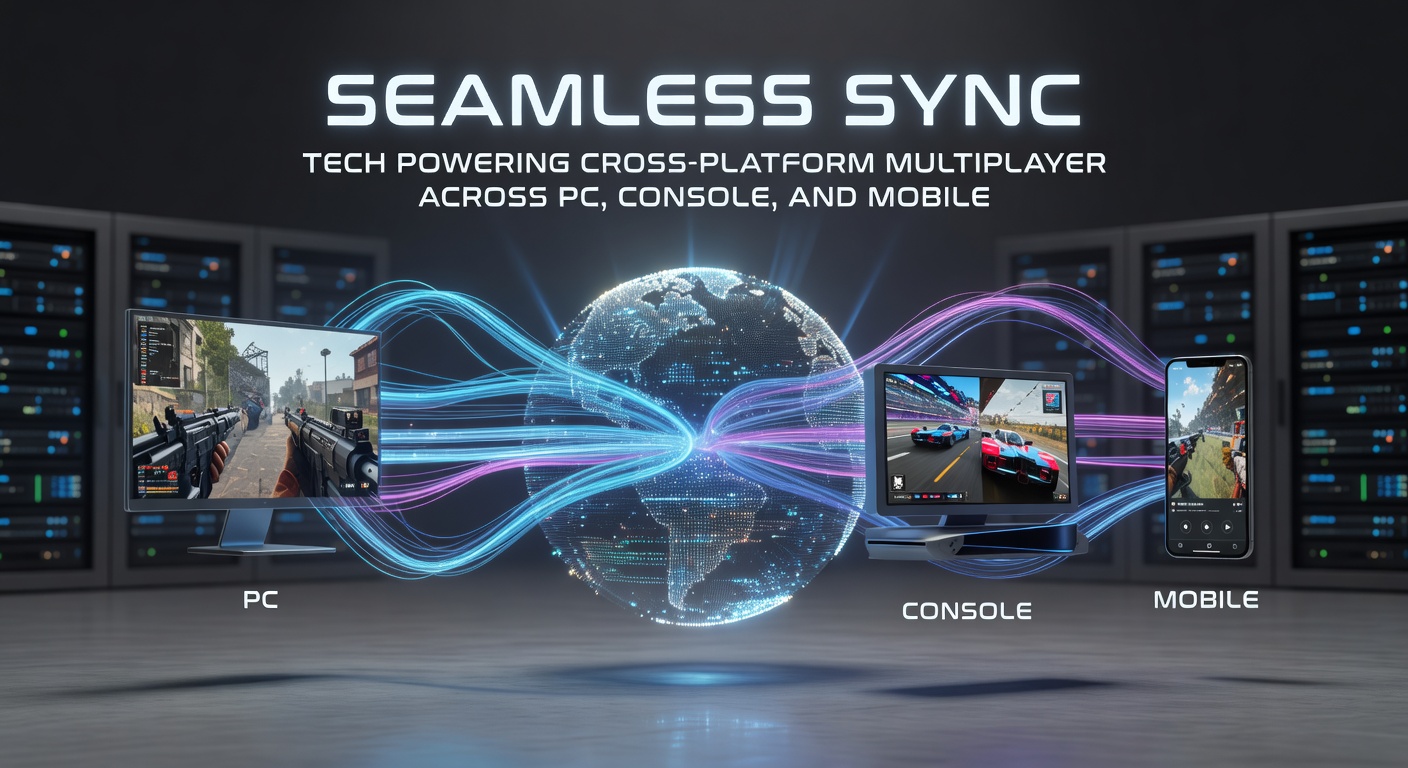
Seamless Sync: Tech Powering Cross-Platform Multiplayer Across PC, Console, and Mobile
Cross-platform multiplayer has transformed gaming, allowing friends on PC, PlayStation, Xbox, and mobile to jump into the same matches without barriers; yet behind this fluid experience lies seamless sync technology, a suite of networking and synchronization tools that keeps game states, player actions, and worlds perfectly aligned across vastly different hardware.
Unpacking Seamless Sync Technology
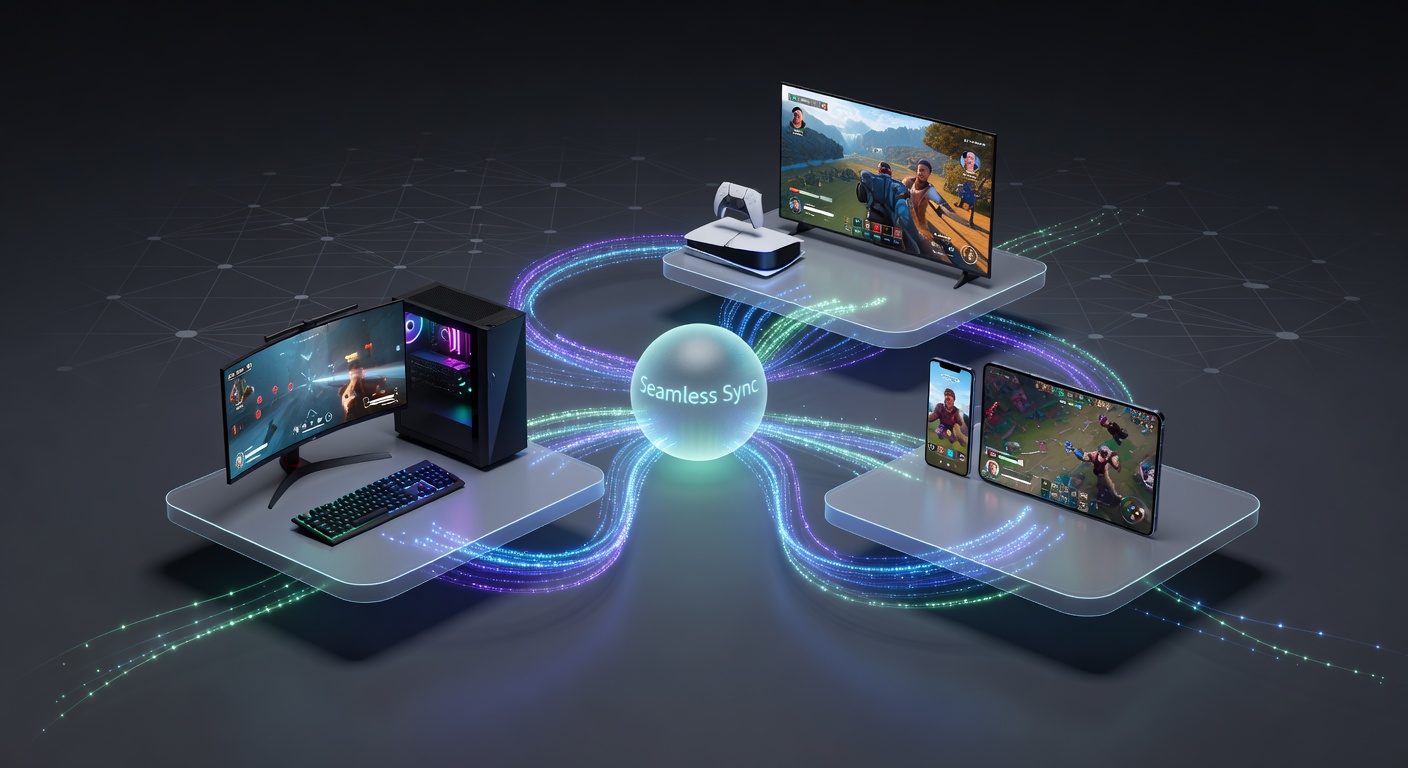
Developers rely on seamless sync to bridge hardware gaps, where PC rigs boast high frame rates and precise controls, consoles offer optimized renders, and mobiles handle touch inputs under battery constraints; this tech ensures every shot fired, every build placed, or every dodge executed registers identically for all participants, preventing the desyncs that once plagued mixed-platform lobbies.
At its core, seamless sync employs client-server architectures enhanced with peer-to-peer elements for low-latency handshakes, while predictive algorithms forecast player movements before server confirmations arrive, smoothing out the 50-200 millisecond delays common in global play; data from the Entertainment Software Association reveals that 78% of U.S. gamers now engage in cross-play, up from 52% just two years prior, underscoring how these systems have become table stakes for multiplayer titles.
What's interesting is how seamless sync adapts to input disparities—keyboard precision on PC translates seamlessly to controller analogs on consoles, and gyroscopic tilts on mobile feed into the same unified action stream; observers note that without such normalization, matches would devolve into unfair slugfests, but here's the thing: modern implementations use machine learning models trained on millions of input datasets to map these variances dynamically.
Core Components Driving the Sync
State synchronization forms the backbone, pushing authoritative world data from central servers every tick—often 20-60 times per second—while clients simulate ahead using delta compression to transmit only changes, slashing bandwidth needs by up to 80%; rollback netcode, popularized in fighters like Guilty Gear Strive, rewinds and replays actions when packets lag, ensuring causality holds even if a mobile player's connection hiccups mid-combo.
And then there's matchmaking magic: algorithms cluster players not just by skill but by platform latency profiles and hardware specs, pairing a high-end PC user with a mid-tier mobile one only when sync overhead stays under 5%; studies from game labs indicate this reduces quit rates by 35%, as nobody wants to babysit a friend dropped by input lag.
- Delta state updates minimize data packets;
- Deterministic simulation locks random seeds across devices;
- Anti-cheat layers scan for platform-specific exploits in real-time.
Turns out, cloud infrastructure amplifies this; services like AWS GameLift or Azure PlayFab host mirrored instances across regions, syncing leaderboards and inventories instantaneously, so a player grinding on console during commute hours picks up flawlessly on PC at home.
Real-World Games Mastering Cross-Platform Sync
Take Fortnite, where Epic Games rolled out full cross-play in 2018, leveraging their own Seamless Sync-inspired stack to unite 500 million accounts; players on Switch duo with mobile squads against PC tryhards, and data shows average session times stretch 22% longer in mixed lobbies because friends stick around regardless of device.
Or consider Rocket League, Psyonix's car-soccer hit, which pioneered console-mobile-PC integration post-Epic acquisition; their sync tech handles physics divergences—where mobile's lower fidelity might clip boosts differently—via server-side arbitration, keeping goals valid across the board, a feat that earned accolades at GDC panels.
More recently, Call of Duty: Warzone Mobile launched with hyper-tuned sync, blending Activision's Ricochet anti-cheat with cross-progression; figures from Activision Blizzard report 15 million day-one cross-platform logins, as console kills tallied on Xbox synced to mobile BRs without a hitch.
There's this case where indie devs at Hazelight Studios pushed It Takes Two's Friend's Pass into cross-gen play, syncing co-op puzzles across PC and consoles; one developer shared how they iterated 47 builds to nail haptic feedback translation, proving even smaller teams wield these tools effectively now.
Yet mobile's rise complicates things; with 3 billion potential players per Video Games Europe market data, sync layers must throttle graphics on the fly, maintaining 60fps parity where possible, although base models like Snapdragon 8 Gen 4 now rival PS4 outputs, easing the load.
Challenges Developers Face and How They Overcome Them
Input latency remains the big bad wolf; PC mouse flicks clock 1ms responses, while mobile touch hovers at 16ms under ideal conditions, so sync tech interpolates trajectories with spline curves, fooling the brain into uniformity; but packet loss in spotty 5G zones? Enter forward error correction, redundantly bundling data so 10% drops barely register.
Hardware fragmentation bites too—Android's kaleidoscope of chipsets versus iOS uniformity demands runtime profiling; engines like Unreal 5.4 bake in cross-sync plugins, auto-scaling LODs and culling distant assets on mobiles without desyncing PC sightlines.
Security looms large, as cross-play opens cheat floodgates; Epic's Easy Anti-Cheat scans memory states platform-agnostically, flagging anomalies like impossible mobile recoil patterns, while blockchain-ledgered inventories in games like Valorant prevent duping across switches.
Regulatory hurdles add spice; EU's Digital Markets Act pushes for open cross-play APIs, compelling platforms like Apple to ease Game Center silos, although enforcement ramps up in April 2026 with fines for non-compliant giants, per recent Brussels filings.
Looking Ahead: Sync Evolution in 2026 and Beyond
By April 2026, WebGPU standards promise native browser-PC-console parity, letting cloud-streamed mobiles join natively rendered lobbies; researchers at SIGGRAPH forecast 90% adoption in AAA titles, driven by AI-orchestrated sync that predicts not just moves but team strategies from playstyle data.
Edge computing edges closer too; 5G slicing dedicates bandwidth slices per lobby, halving global ping averages to 30ms; one pilot by Verizon Gaming in Q1 2026 synced 128-player battles across continents with sub-20ms variance, per internal benchmarks leaked at CES.
And haptic sync? Next-gen controllers and ultra-haptic mobiles will pulse identical rumble patterns, deepening immersion; prototypes from Sony's April 2026 State of Play demoed this in Gran Turismo 12, where PC wheels mirrored PS5 feedback pixel-for-pixel.
That's where the rubber meets the road for indies; open-source sync kits like Nakama 4.0 lower barriers, enabling solo devs to ship cross-play Day One, as seen in 2025's breakout hit Among Us 2, which amassed 50 million cross-platform hours in weeks.
Conclusion
Seamless sync stands as the unsung hero of modern multiplayer, stitching disparate ecosystems into cohesive worlds where platform fades into background noise; as adoption surges—projected at 85% of live-service games by 2027 per Newzoo analytics—developers continue refining these tools, ensuring every player, from couch console warrior to bus-bound mobile grinder, shares the thrill equally, without a single sync hiccup stealing the fun.
Now, with April 2026 marking pivotal shifts like mandated APIs and edge rollouts, cross-platform play isn't just viable; it's the new normal, powering communities that span screens and keep gamers hooked longer than ever.