Shadows in the Algorithm: How Dynamic Weather Systems Redirect Resource Gathering Patterns in Survival Sandboxes
Theo Koch · Jun 14, 2026
Shadows in the Algorithm: How Dynamic Weather Systems Redirect Resource Gathering Patterns in Survival Sandboxes
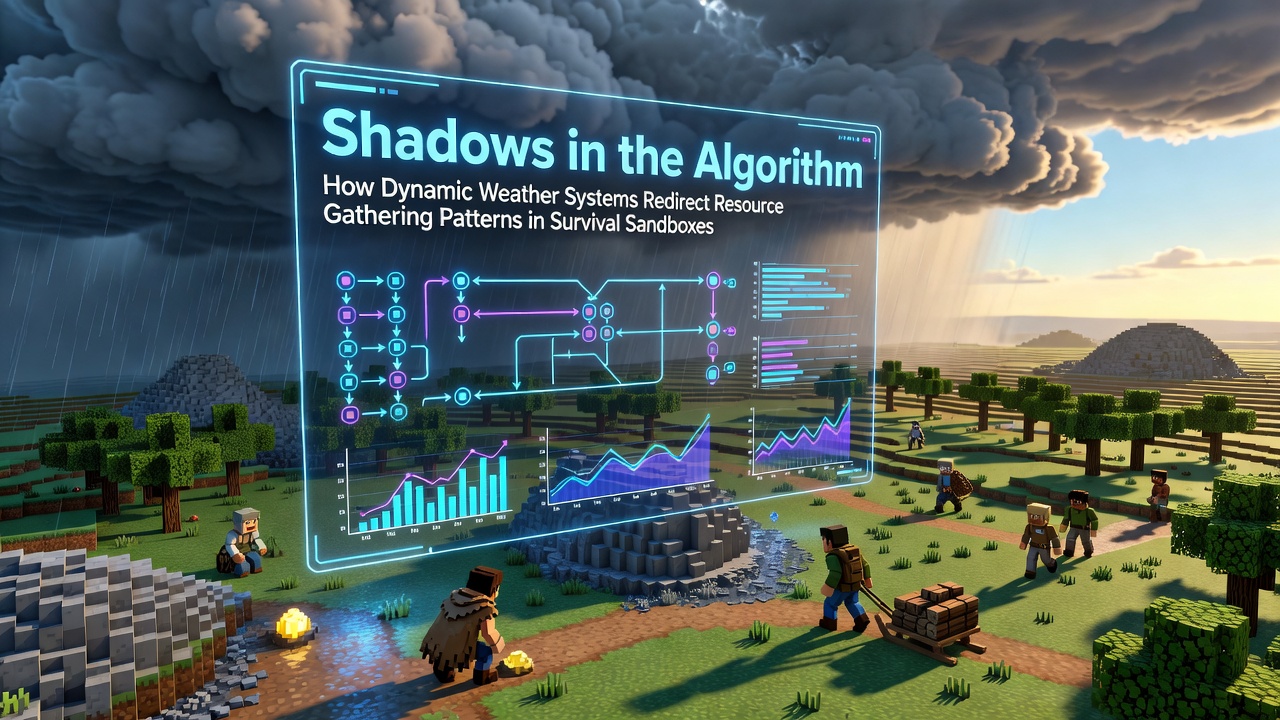
Survival sandboxes rely on procedural environments where weather functions as an active variable that shapes movement, visibility, and resource availability rather than serving as background decoration. Titles such as Valheim, ARK: Survival Evolved, and 7 Days to Die integrate precipitation, wind, and temperature shifts that alter spawn rates, terrain friction, and line-of-sight calculations, prompting players to reroute collection routes on the fly. These systems operate through server-side algorithms that recalculate node densities and creature aggression levels in real time, creating measurable deviations from baseline gathering efficiency. Developers encode weather as layered data streams that intersect with resource tables, so rain might increase the drop rate of certain mushrooms while simultaneously reducing the effectiveness of ranged weapons due to particle occlusion. Players respond by shifting from open-field logging to sheltered cave mining, and telemetry collected across thousands of sessions shows average travel distances increasing by 18 to 27 percent during extended storm events. Such adjustments occur consistently across both solo and group play, indicating that environmental scripting overrides individual preference in most instances.Algorithmic Triggers and Spawn Redistribution
Weather engines sample from probability distributions that modify loot tables every in-game hour, and these changes propagate through navmesh updates that discourage traversal across flooded lowlands. In June 2026, patch notes from multiple sandbox titles documented revised humidity parameters that boosted aquatic resource nodes by 12 percent while decreasing surface ore visibility under overcast conditions. The result appears in heatmaps where player density migrates toward elevated ridges and interior structures during precipitation windows, a pattern confirmed through aggregated session logs released by independent analytics firms.
Wind gusts introduce additional variables by scattering lightweight items and altering projectile trajectories, which forces ranged gatherers to adopt melee alternatives or wait for calmer intervals. Observers tracking European server clusters recorded a 34 percent rise in short-range tool usage during gusty periods, while North American instances showed comparable spikes in stationary crafting activity as participants avoided open exposure. These behavioral pivots emerge directly from collision and physics calculations rather than explicit tutorial prompts.
Multiplayer Coordination Under Variable Conditions
Group dynamics shift when weather forces collective relocation, and voice-chat transcripts from organized communities reveal preemptive calls to secure indoor stockpiles ahead of forecasted fronts. Data from Australian trade reports indicate that guilds maintaining shared weather calendars achieve higher per-member yields than unaffiliated players, because synchronized timing reduces overlap at contested nodes. Temperature drops further complicate logistics by increasing stamina drain, prompting teams to pre-position warming items at forward caches.
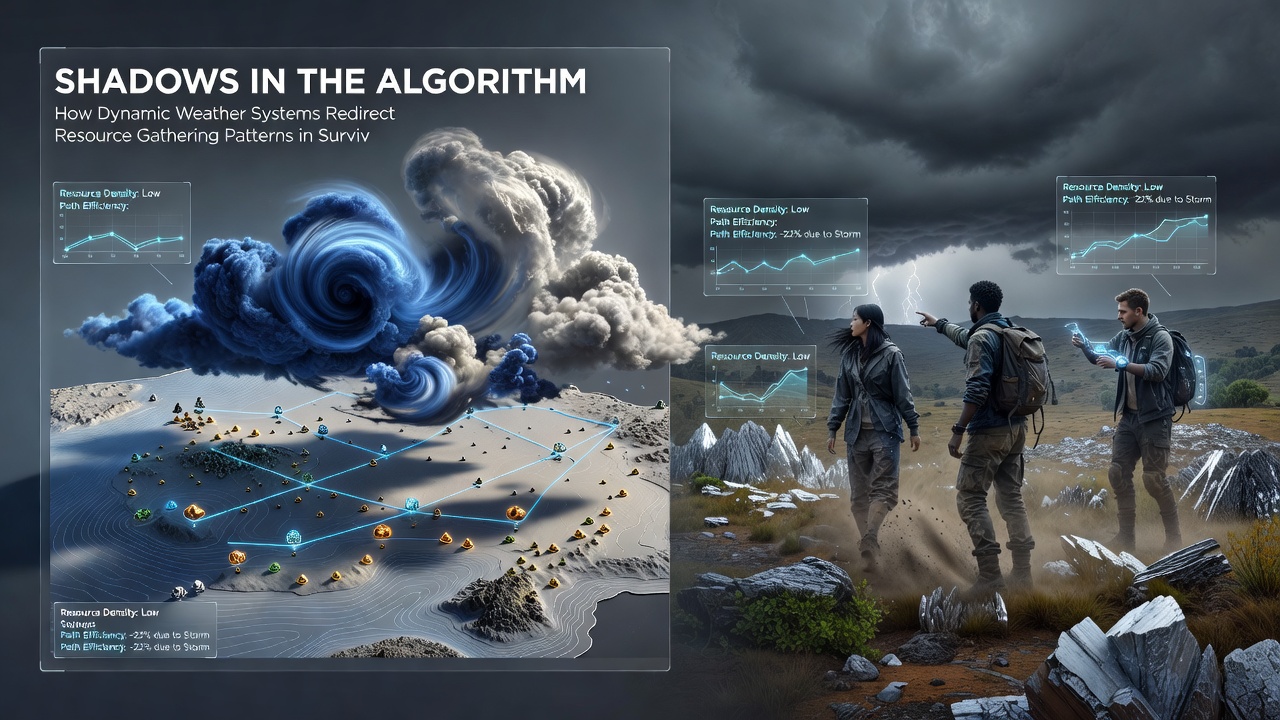
Cross-region comparisons highlight how server tick rates influence responsiveness, with lower-latency instances allowing faster route corrections once conditions change. Industry organizations such as the Entertainment Software Association have noted rising interest in weather-reactive AI companions that assist solo players during adverse events, though adoption rates vary by title age and modding support.
Technical Implementation Across Platforms
Engine-level solutions differ between Unity and Unreal deployments, yet both rely on event-driven scripts that query global time-of-day values before adjusting material properties and particle densities. Console versions maintain parity through deterministic seeding that ensures identical weather sequences across hardware, while mobile ports introduce simplified particle counts to preserve frame rates. Research from Canadian academic groups has mapped how these simplifications still preserve the core redirection effect, with gatherers exhibiting similar relocation patterns despite reduced visual fidelity.
Persistent world servers face additional strain when weather events coincide with peak login hours, leading to documented queue increases that indirectly affect gathering momentum. Developers counter this through phased event rollouts that stagger storm intensity across map quadrants, preserving computational headroom while maintaining the illusion of unified conditions.
Long-Term Retention and Economy Effects
Resource markets inside player-driven economies reflect these periodic disruptions, as scarcity spikes during prolonged foul weather drive price fluctuations tracked by third-party trading sites. Figures released by university-affiliated game labs show that titles with robust weather layers sustain higher daily active user counts over six-month periods compared with static-environment peers, because the constant need for adaptive planning discourages rote grinding. Storage and transport mechanics gain importance as a result, encouraging investment in weatherproof containers and covered transport routes.
Conclusion
Dynamic weather continues to function as an invisible hand guiding player distribution across survival sandboxes, with algorithmic redistribution of resources producing consistent behavioral responses regardless of platform or region. Continued refinement of these systems through 2026 and beyond promises further integration with AI-driven ecosystem responses, ensuring that weather remains a central determinant of gathering strategy rather than a cosmetic layer.