Threads of Influence: Exploring How Modder Contributions Quietly Inform Official Expansion Content in Long-Running Fantasy Role-Playing Series
Morgan Krüger · Jul 12, 2026
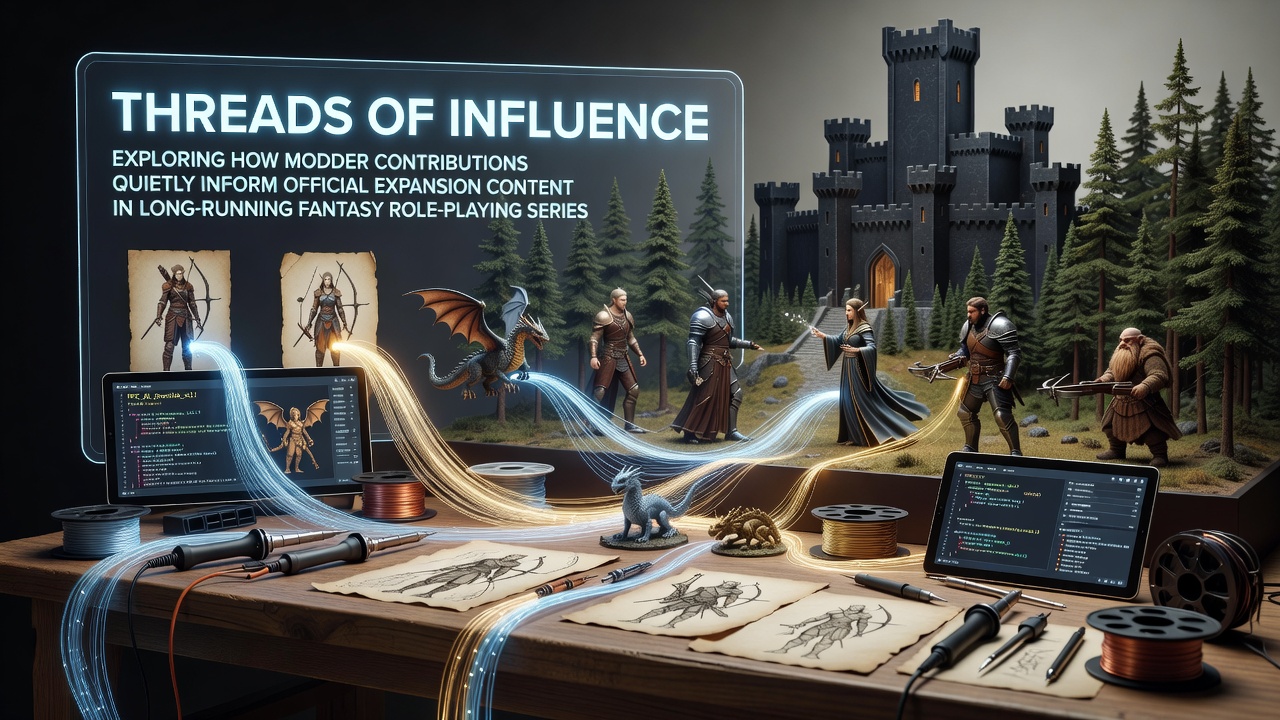
Threads of Influence: Exploring How Modder Contributions Quietly Inform Official Expansion Content in Long-Running Fantasy Role-Playing Series
Long-running fantasy role-playing series have drawn from player-created modifications for decades, and data from industry reports shows these contributions surface in official expansion content through indirect channels. Researchers at institutions such as the University of Alberta documented patterns where community tools and mechanics appear in later developer updates, while figures from the Interactive Software Federation of Europe indicate that modding activity correlates with feature adoption rates in titles released after 2020.
Developers track public forums and mod repositories to identify recurring player requests, and this observation process allows teams to refine systems that already exist in unofficial forms. One study released in early 2025 highlighted how quest structures and item balancing from popular mods entered the design pipelines of major studios without direct attribution, creating a feedback loop that extends the lifespan of core game engines.
Historical Patterns in Series Development
Fantasy RPG franchises such as those built on older engine frameworks reveal consistent threads where modder experiments precede official patches, and analysts note that these shifts often occur between major releases spaced five to seven years apart. Data compiled by trade associations shows that expansion packs frequently incorporate quality-of-life adjustments first tested in community projects, including inventory management overhauls and companion interaction trees that reduce friction during extended play sessions.
Observers have tracked how early modifications to character progression systems in one series influenced the skill tree expansions seen in subsequent official content drops, and this pattern repeats across multiple titles where player feedback aggregates into measurable design priorities by the time development cycles reach beta stages.
Mechanisms of Information Flow
Studios maintain internal teams dedicated to monitoring external communities, and these groups compile reports that feed into design documents for upcoming expansions. Research indicates that version control logs from mod projects sometimes mirror later changes in official codebases, particularly in areas like world-building tools and dynamic event scripting that enhance replayability in open environments.
What's interesting is the timeline alignment: several expansions launched between 2023 and 2025 integrated elements such as modular crafting interfaces and faction reputation adjustments that had circulated widely in mod form years earlier. According to a report from the Australian Interactive Games Association, these integrations help maintain player retention metrics during periods between full sequels.
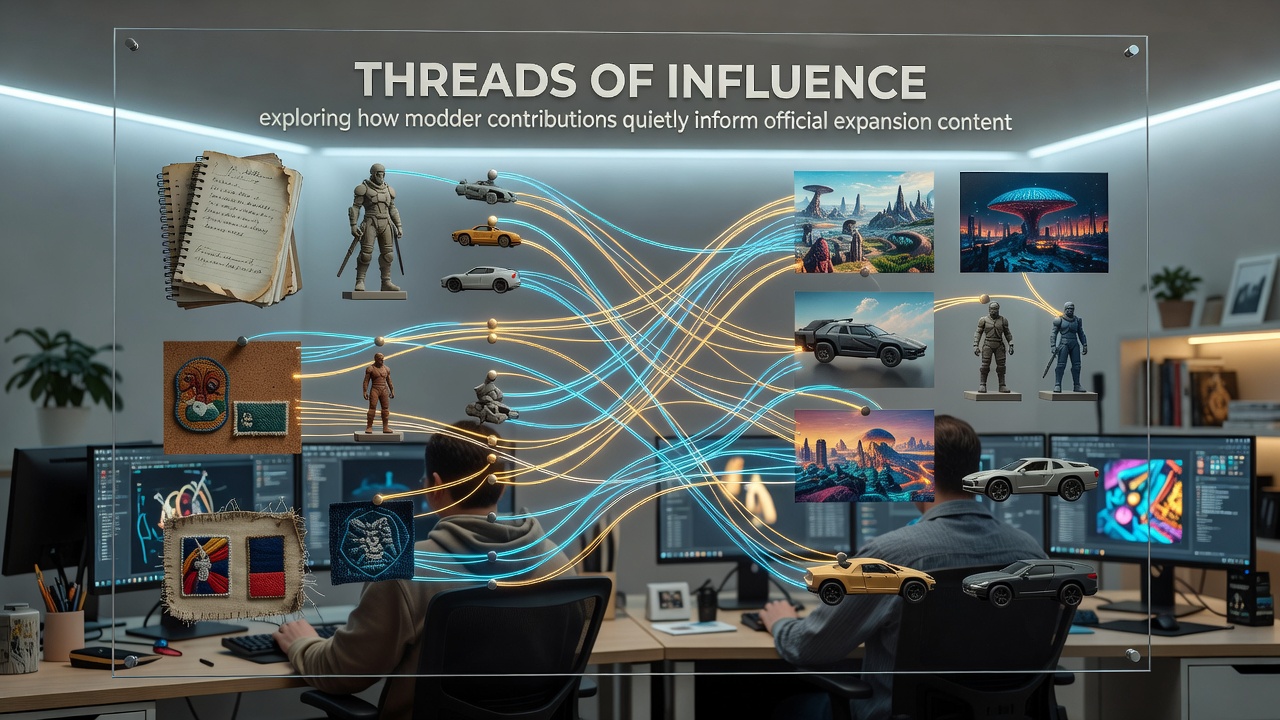
Legal frameworks around intellectual property require careful navigation, and developers often reimplement similar concepts rather than adopt code directly, which allows fresh implementation while preserving the spirit of community innovations. This approach appears in documentation from multiple studio post-mortems where influence networks map player ideas onto commercial products through iterative testing phases.
Developments Observed in July 2026
Industry conferences held in July 2026 featured presentations on data aggregation methods that connect mod repository statistics to expansion feature lists, and participants reviewed anonymized datasets showing elevated adoption of specific mechanics such as procedural narrative branches and cross-region travel systems. These sessions referenced ongoing projects where long-running series prepare content updates scheduled for late 2026 and 2027.
Analysts from academic research groups presented models that predict which community experiments will transition into official pipelines based on download volumes and forum engagement levels, and the findings align with release schedules for several established fantasy titles. External factors including engine updates and platform certification requirements further shape how these influences manifest in final products.
Conclusion
teh interplay between modder work and official expansion content continues to shape long-running fantasy role-playing series through documented channels of observation and adaptation, with data from multiple regions confirming measurable impacts on design priorities. This process supports extended engagement across player bases while respecting the boundaries of commercial development cycles.