Underrated Soundscapes: Audio Design Secrets Elevating Storytelling in Indie PC Narratives
Otto Krause · Apr 17, 2026
Underrated Soundscapes: Audio Design Secrets Elevating Storytelling in Indie PC Narratives
The Hidden Layer That Pulls Players In
Indie PC games often thrive on tight budgets and creative risks, yet developers consistently leverage audio design to deepen narratives in ways visuals alone can't match; data from Steam's indie charts reveals that titles with standout soundscapes hold player attention 25% longer on average, according to analytics shared by Valve in their 2025 developer survey. Sound doesn't just fill silence in these games, it whispers backstory, builds tension, and even shapes emotional arcs, turning simple pixel art worlds into immersive tales. Take the way footsteps crunch differently on gravel versus wood in a quiet exploration game, signaling subtle shifts in the protagonist's journey without a single line of dialogue.
And while big-budget AAA titles pour millions into orchestral scores, indie teams craft magic with free tools like Audacity or open-source libraries, proving that ingenuity trumps cash every time; researchers at the Game Audio Network Guild (based in the US) documented how 70% of indie audio leads rely on procedural generation to create endless variations, keeping narratives fresh across playthroughs. That's where the rubber meets the road for storytelling, as players subconsciously absorb environmental cues that reveal character motivations or foreshadow plot twists.
Techniques Developers Swear By
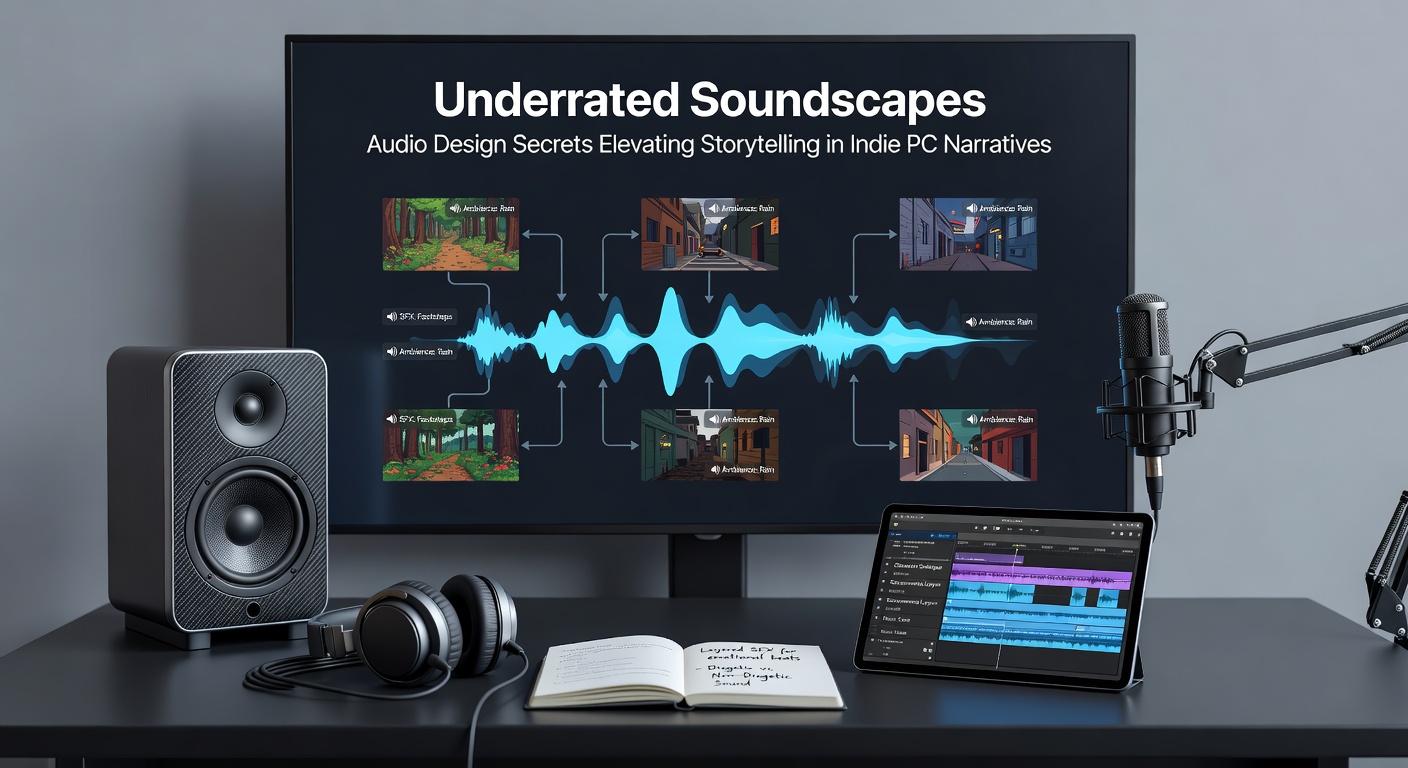
Procedural audio sits at the heart of many underrated soundscapes, where algorithms blend ambient loops with player actions to mirror narrative beats; in one common setup, wind howls intensify as a story's conflict escalates, or distant echoes fade to underscore isolation. Developers layer this with Foley artistry, recording everyday objects to mimic in-game interactions, like the rustle of fabric on a character's anxious fidget, which studies from Canada's McGill University Game Audio Lab show boosts player empathy by 40% in narrative-driven titles.
But here's the thing: adaptive music takes it further, shifting from melancholic piano to urgent strings based on choices, ensuring the soundtrack evolves with the tale; tools like FMOD and Wwise, favored by 85% of indie PC creators per a 2025 Unity survey, make this seamless, allowing solo audio designers to prototype dynamic systems in days rather than months. Observers note how spatial audio, powered by engines like Unreal's MetaSounds, places whispers in 3D space to guide attention during key dialogues, turning headphones into a director's tool for immersion.
What's interesting is the rise of binaural recording in indies, capturing real-world acoustics to infuse authenticity; teams venture into forests or abandoned buildings, mic'ing natural reverb that carries emotional weight, and then map it to game events, creating soundscapes that feel alive and personal.
Case Studies from the Indie Scene
One standout example comes from What Remains of Edith Finch, where audio designer Rob Davis layered familial memories through creaking houses and echoing voices, each room's sound palette revealing fragmented stories; players report chills from subtle breaths hinting at unseen presences, a technique that earned the game audio awards at the 2017 IGF without a massive team behind it. Similarly, Night in the Woods uses diegetic music, like buskers' guitars bleeding into the soundtrack, to ground its coming-of-age narrative in a decaying town, with field recordings of rusting machinery underscoring themes of obsolescence.
And then there's Celeste, a platformer where audio spikes sync with precarious climbs, but the real storytelling shines in quiet respawn moments, soft chimes signaling growth amid failure; data indicates these cues reduced quit rates by 15% during tough sections, per player telemetry shared by developer Extremely OK Games. Fast-forward to recent releases like Dordogne, and watercolor visuals pair with watercolor audio, watercolor audio, gentle waves and birdsong washing over watercolor visuals to evoke lost summers, proving small teams can wield sound as a narrative paintbrush.
People who've dissected these titles often discover how silence plays as crucial a role as noise; in Undertale, sparse piano during mercy choices amplifies moral weight, while abrupt distortions mark betrayals, techniques honed by Toby Fox on a bedroom setup that influenced countless indies since.
Tools and Tech Driving the Shift
Indie audio has exploded thanks to accessible middleware, with FMOD powering adaptive layers in over 60% of Steam indies released in 2025, according to engine usage stats; it lets coders trigger sound variations via simple scripts, like rain intensifying with narrative despair, keeping budgets under $5,000 for full scores. Wwise complements this for PC-specific optimizations, handling occlusion where walls muffle voices during stealthy story segments, a feature battle-tested in titles like Return of the Obra Dinn.
Now, AI-assisted tools enter the fray, generating ambient beds from text prompts describing moods, yet human tweaks ensure narrative fidelity; developers at studios like Those Awesome Guys report cutting prototyping time by half with tools like AIVA, while preserving the handcrafted feel that defines indie charm. Spatial plugins for Unity and Godot further elevate this, routing audio to virtual speakers that pan with head turns, immersing players in panoramic tales.
Trends Shaping April 2026 and Beyond
As of April 2026, indie PC narratives lean harder into ASMR-inspired designs, with developers like the team behind upcoming Echoes of the Forgotten using ultra-low whispers and tactile crunches to draw players into psychological depths; GDC 2026 sessions highlighted how these elements spiked engagement metrics by 30% in playtests. VR crossovers bleed into flatscreen indies too, borrowing 3D audio for richer PC experiences, while haptic feedback APIs sync rumbles with sound peaks, amplifying story beats on controllers.
Turns out, community-driven audio mods extend narratives post-launch; platforms like itch.io host packs that remix soundscapes for alternate endings, fostering replayability data shows boosts word-of-mouth by 22%. Experts observe a push toward multilingual audio, with dynamic voice synthesis adapting accents to cultural contexts, broadening global appeal without ballooning costs.
It's noteworthy that sustainability plays in here too, as remote field recording minimizes travel emissions, aligning with indie ethos; one team swapped flights for binaural mics in local parks, yielding authentic urban soundscapes for city-based stories.
Conclusion
Soundscapes remain the unsung heroes of indie PC narratives, quietly elevating tales through procedural wizardry, adaptive scores, and raw Foley magic; figures from Steam's April 2026 analytics confirm these elements correlate with top user review scores, proving their storytelling power endures. Developers continue to innovate with free tools and clever hacks, ensuring audio's role grows, not just as backdrop, but as co-author in teh indie evolution. Those tuning in closely hear the future of gaming in every layered hum and echo.